

Newsletter October 31, 2026
From Workbench to Business Plan: Scaling Your Candle Craft
It's time to move past pouring candles when they sell. We talk about planning inventory, pricing discipline, and building a solid business operation from your bench.
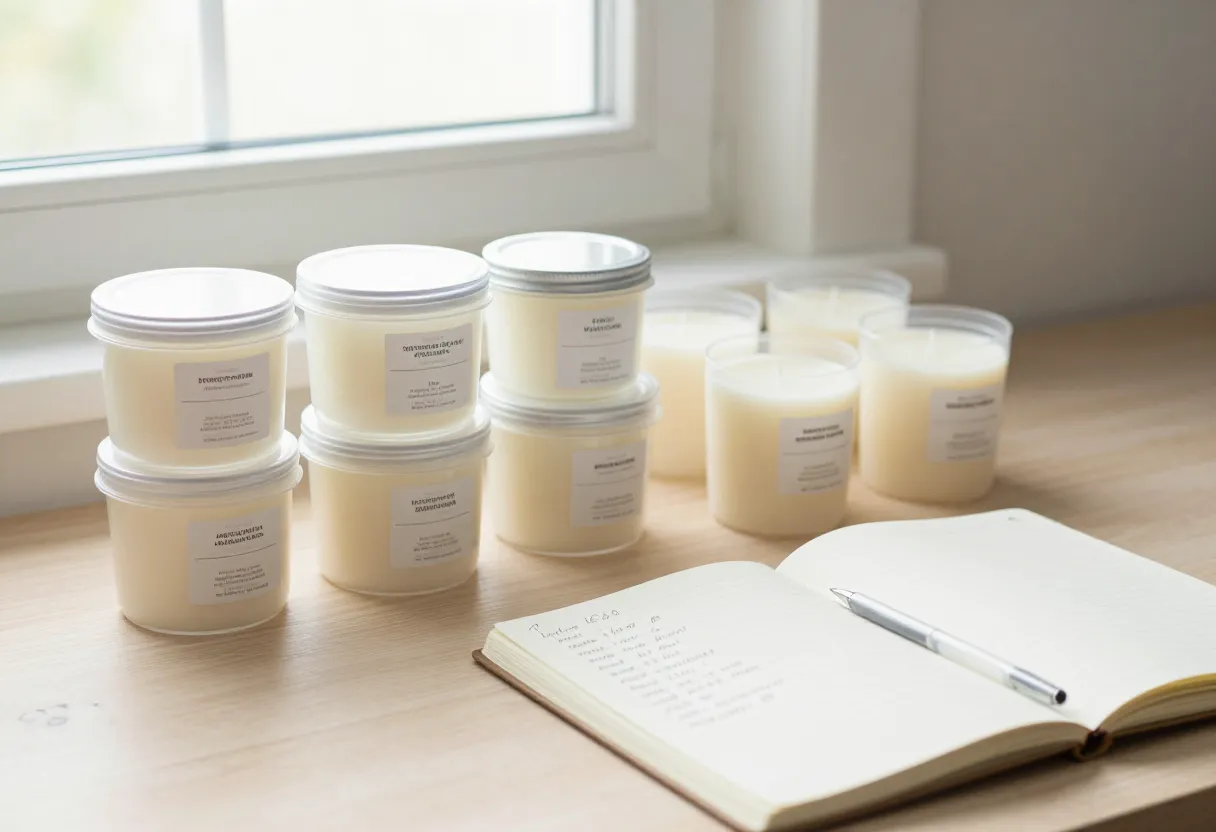
The Shift: From Passion Project to Operational Business
I remember when I first started pouring candles; it was pure craft and personal enjoyment. There is something rewarding about the tactile process—mixing the wax, selecting a fragrance that hits just right, and watching the liquid settle into a jar. However, there is a distinct line where making a great candle ends and running a business begins. When you move from “I want to sell some” to “This is my livelihood,” your role shifts significantly. You are no longer just a maker for an hour; you become a logistics manager, a bookkeeper, and a production foreman.
Scaling requires the same kind of discipline I learned in the Corps—it’s about systems and rigor. If you don’t have a plan for how many units you need to move to cover your overhead or a schedule for when those pours happen, it remains a hobby. Scaling up means moving from “I feel like making this today” to “This is what needs to be done to keep the operation running.” It’s about treating your workbench with the same logistical respect as any other small business.
Discipline Over Enthusiasm: The Mindset of Scaling Up

A lot of makers rely on creative bursts—waiting for that spark of inspiration to strike before they start working. That works fine when you’re making a dozen candles for friends, but it doesn’t scale. To grow, you need discipline over enthusiasm. This means moving toward systems thinking rather than relying on how “inspired” you feel each morning.
I want you to look at your time as a tracked cost. If it takes you three hours to label fifty jars and clean your workspace, that is part of the price of those candles. Another common mistake I see is reactive pricing—looking at what everyone else on Etsy is charging and trying to underbid them just to get noticed. That’s a race to the bottom where nobody wins long-term. Instead, focus on your own costs and value. When you treat your labor as a non-negotiable expense in your math, it takes the emotion out of pricing and replaces it with logic. Consistency is what builds a brand; sporadic bursts of work lead to inconsistent stock and burnt-out makers.
Prepping Inventory for Slow Times: The Seasonal Calendar Approach
One of the biggest hurdles I see for small makers is the “seasonal crunch.” You wait until November to start thinking about holiday scents, and suddenly you’re overwhelmed trying to catch up with demand while your production capacity is maxed out. My approach—and one that serves well in any disciplined operation—is a seasonal calendar. This means planning your scent themes months in advance.
If you know you want to offer a fall collection, you should be sourcing those containers and testing the fragrance loads during the summer. Use a checklist to ensure nothing falls through the cracks:
- Scent selection and batch testing (including full curing time).
- Container procurement (buying in bulk saves significant margins).
- Label design and compliance checks.
- Production schedule for “slow” months.
By batch-producing your specialty scents during the quieter periods, you create a buffer. You aren’t scrambling to pour when orders are flooding in; you’re simply fulfilling what is already on the shelf. Foresight is just as important as craft. For more on planning ahead, see my guide to seasonal candle planning.
Setting Your Rates (And Sticking To Them)

Pricing is where many makers get it backwards. They look at the cost of the wax and the fragrance, multiply by two, and call it a day. But that doesn’t account for the electricity to run your melter, the shipping tape, the website fees, or—most importantly—your time. To set a rate you can stick to, you need a clear formula:
- Materials: Wax, wicks, fragrance, jars, labels, and packaging materials.
- Labor: The actual hours spent pouring, cleaning, labeling, and marketing.
- Overhead: Equipment wear-and-tear, studio space, and recurring software subscriptions.
When you add these up, your price must cover the total sum plus a margin for growth or reinvestment. If you find that your “fair” price doesn’t cover your time, you have to adjust either your process (finding efficiencies) or your pricing structure. Use a calculator to keep this objective; don’t guess at what people will pay while ignoring what it actually costs you to make the product. You can start by using my /tools/pricing-calculator/.
Simple Sales Channels: Making Social Media Work for You
You don’t need a massive marketing budget or high-production commercials to start making sales. For many small makers, social media is just an extension of your workbench—a place to show the process and communicate clearly with your customers. Think of platforms like Instagram as a visual storefront. Consistency here means showing similar types of content: your latest pour, a close-up of a finished label, or a quick update on what’s currently in stock.
Because you are likely working in small batches, use that to your advantage by communicating “limited run” availability clearly. It creates a sense of urgency without needing high-pressure sales tactics. Use DMs and comments to answer specific questions about burn times or scent profiles. The goal is to build trust through clear communication, not to shout over the noise with flashy ads. Keep it simple: show what you make, tell them when it’s available, and be there to answer their questions honestly. To get started on the business side of things, check out my /guides/starting-a-candle-business-explained/.
Inspired by a story from Makesy Blog.
Get the next issue
Questions or corrections? Send a note. Or read more issues.