

Newsletter November 8, 2026
Pumpkin Decor and Display for Seasonal Candles
Using natural elements like gourds and pumpkins can make your fall collection pop. We're talking about safe display techniques, not just carving ideas.
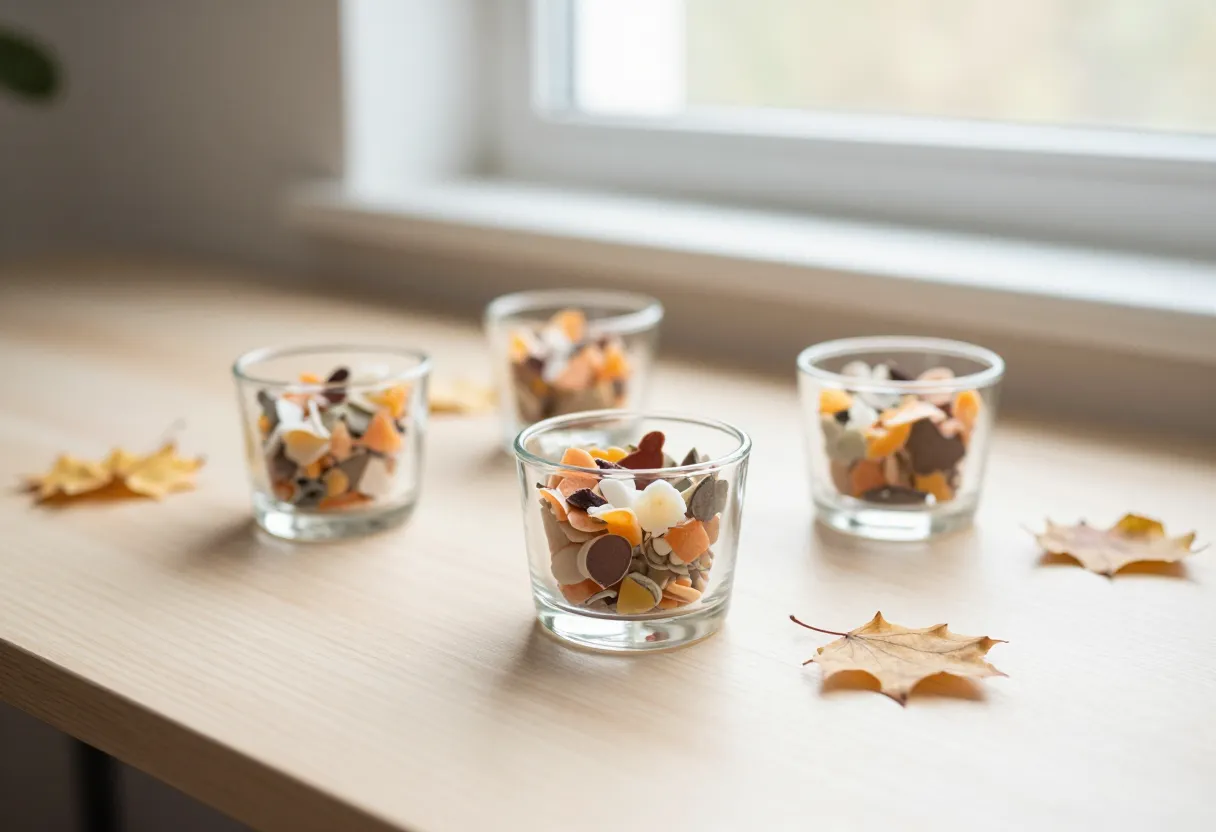
Making Decor Part of Your Product Story
When you’re standing at your workbench, it’s easy to get tunnel-visioned on the technical side of things—the pour temperatures, the wick types, and the fragrance percentages. But once that candle leaves my studio, its job changes. It has to tell a story in someone else’s home. For seasonal products like fall candles, part of that story is told before they even light the wick.
Using natural elements like pumpkins or dried corn husks isn’t just about making a pretty photo; it’s about providing context. When a customer sees your candle nestled among autumn harvest items, they can immediately visualize where that candle belongs on their own mantel or kitchen table. It helps them move from “I like this scent” to “I want my home to feel like this.” I’ve found that incorporating these elements into your display—whether it’s for a local market booth or an online listing—helps bridge the gap between a finished product and a seasonal experience.
The Display vs. The Vessel: Keeping Safety First
There is a very important distinction we need to make here, and I want to be clear about it from the start: there is a massive difference between using a pumpkin as a decorative prop and using one as a functional candle vessel. In my experience, many makers get this backwards when they see “pumpkin candles” online.
Unless you are using a specialized, heat-treated container designed specifically for wax, I do not recommend pouring hot wax into raw pumpkins or organic gourds. Organic materials can crack, leak, or degrade rapidly when exposed to the high temperatures of molten wax and an active flame. Furthermore, moisture trapped inside a pumpkin can turn into steam, creating a safety hazard. Always treat pumpkins as part of your “set dressing.” If you want a candle that sits inside a small gourd, look for purpose-built containers that mimic that aesthetic but are engineered to handle the heat safely. For more on what makes a safe container, check out my guide on /guides/candle-containers-explained/.
Adapting Your Product for Seasonal Decor
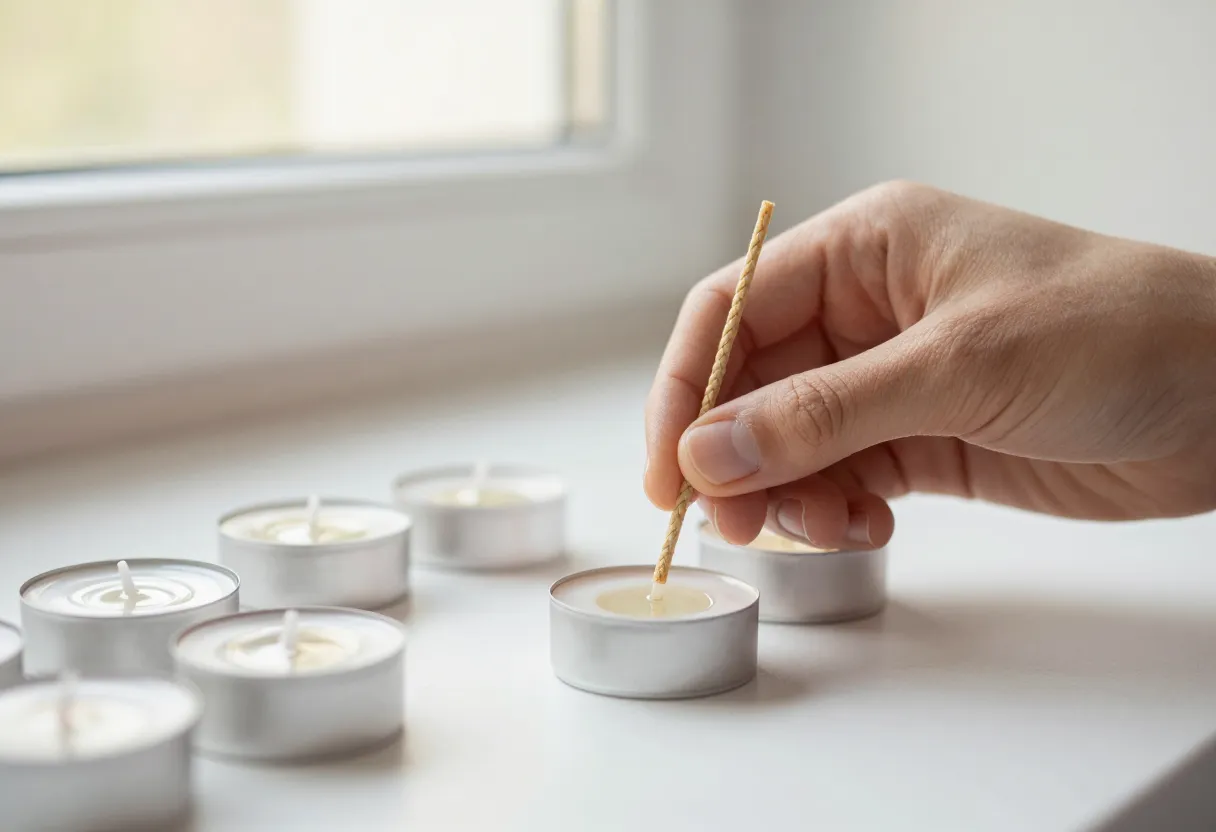
If you want to incorporate natural elements into your display, you might find that your standard 9oz or 12oz jars are simply too large to sit comfortably among smaller decorative items like mini gourds. This is where I recommend looking at your product line from a different angle. Sometimes the best way to “fit” a seasonal theme is to offer a smaller format.
Mini candles, tea lights, and votives are excellent for these types of displays. They provide a lower heat output and a smaller footprint, making them much easier to nestle into a centerpiece without overwhelming the decor. When you move to smaller containers, your wick requirements will change significantly. I always tell people to run their specific container dimensions through my /tools/wick-selector/ rather than guessing. A wick that works perfectly in a large jar will likely drown out or behave poorly in a small votive. Adjusting your product size is often the most practical way to create a cohesive seasonal look without compromising the integrity of the candle itself.
Setting Up the Display Table: Merchandising Tips
When I set up for a market, I try to avoid lining everything up in a straight row like soldiers—though my background sometimes makes that my first instinct. A flat, uniform line can feel cold and uninviting. Instead, think about “grouping” and varying heights. You want to create depth so that a customer’s eye moves naturally across your table or through your photos.
Try using the “rule of three”: group three items together—perhaps a large pumpkin for height, a medium candle in a jar, and a small cluster of gourds at the base. This creates a visual triangle that feels balanced. For your online shop, consider how these elements interact with light. A matte orange pumpkin provides a great contrast against the smooth surface of a wax pour. If you’re taking photos for your website, refer to my /guides/candle-photography-explained/ to see how you can use these props to highlight the texture and color of your candles without letting the decor distract from the product itself.
The Most Important Checklist Item (Safety)
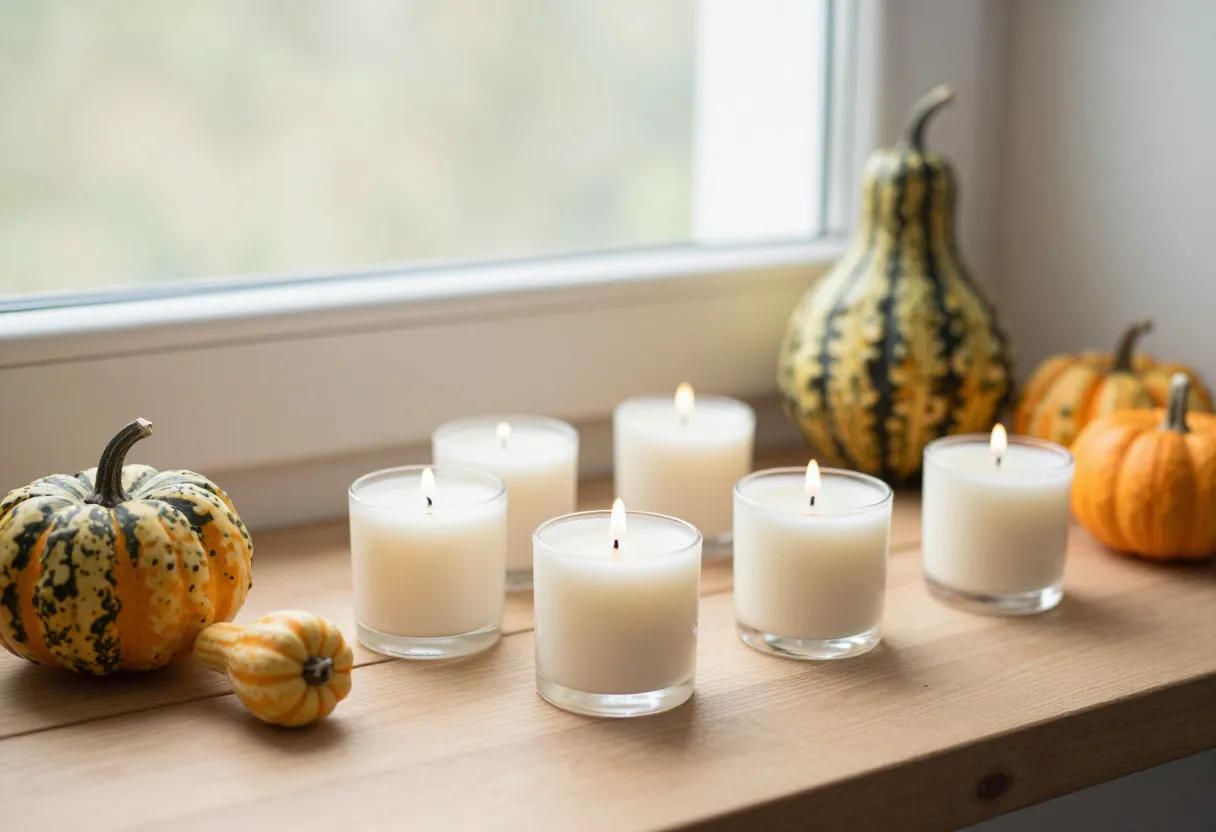
In the Marine Corps and the Civil Air Patrol, we live by checklists because they prevent small mistakes from becoming big problems. When it comes to seasonal displays involving organic materials like pumpkins, hay, or dried leaves, safety is your most important checklist item. These materials are often highly flammable and can be moved easily by a draft or a wandering hand.
Never leave a lit candle unattended near dry organic matter. If you are using these items as props at a market booth, ensure they are placed far enough away from the “active” burn zone so that heat doesn’t dry out the surrounding decor. It is also vital to ensure your candles have been properly tested for their specific containers and wicks before you put them on display. A candle that isn’t burning correctly can become a fire hazard in seconds, especially when surrounded by harvest decor. For a comprehensive breakdown of these rules, please review my /guides/candle-safety-explained/ and always keep your wax supplier’s safety data sheets handy.
Inspired by a story from House Beautiful.
Get the next issue
Questions or corrections? Send a note. Or read more issues.