

Newsletter October 10, 2026
Setting Up Shop: Structuring Your Candle Business?
Making candles is an art, but selling them requires a business plan. We'll walk through the practical steps of legal setup, pricing, and scaling production.
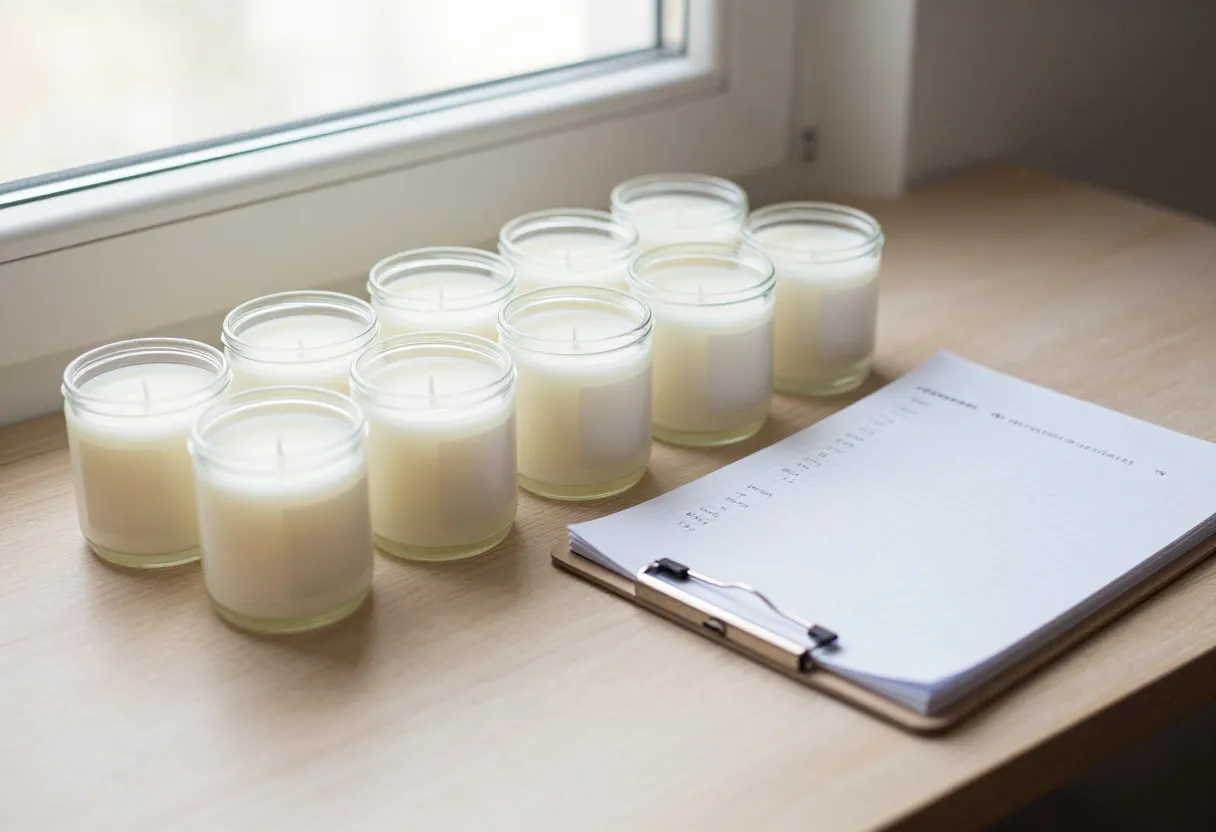
Before you sell: The discipline checklist
Moving from a hobby where you pour candles on your kitchen table to a business that sells them in the mail requires a shift in mindset. It is about moving from “making” to “manufacturing.” In my experience, the biggest hurdle for new makers isn’t the quality of their scent; it’s the consistency of their process. To build a sustainable business, you need discipline. This means creating standard operating procedures (SOPs) for everything you do.
When I started out, I realized that if I couldn’t replicate my success on any given day because I “felt” like doing something a certain way, it wasn’t a business yet. You need to document your batch notes—every pour temperature (referencing your wax supplier’s data sheet), every cooling time, and every wick placement. A disciplined maker treats their workbench like a laboratory. Before you worry about marketing or logos, ensure that if someone else walked into your workspace tomorrow, they could follow your notes to produce a candle identical to the one you sold today.
The numbers game: Pricing, cost of goods (COG), and profit margin

Many makers make a great product but end up losing money because their pricing is based on what they think it should be rather than what it actually costs. To get your margins right, you have to account for every single cent that goes into the jar. This isn’t just about the cost of wax and fragrance; you must include:
- Materials: Wax, wicks, glass containers, and labels.
- Consumables: Shipping tape, bubble wrap, and your time spent packing orders.
- Overhead: A portion of your electricity, rent (if applicable), and the cost of any equipment you own.
I often see makers forget to value their labor. If it takes you an hour to pour, label, and pack ten candles, that hour has a price tag. Use a tool like our pricing-calculator to break these costs down into a per-unit cost. Knowing your exact profit margin ensures that when you grow, you are actually building equity in your business rather than just working for free as a hobbyist who happens to be shipping products.
Beyond the wax: Legal steps for a small business
Once you decide to move from local craft fairs or gifts for friends into the realm of intentional selling, there is more to consider than just the chemistry of the candle. You need to establish a legal framework for your work. This includes things like obtaining an Employer Identification Number (EIN) and checking with your local municipality regarding home-based business permits.
While I cannot provide professional legal or tax advice, these are standard steps for many makers in the United States as they move toward professionalism. It is about creating a barrier between your personal life and your business operations. You want to ensure you are protected and that your customers can trust your brand’s legitimacy. This step takes some time and research into local regulations, but it’s part of the “discipline” phase mentioned earlier—doing the boring work now so you don’t have to worry about it later when your volume increases.
Scaling up production volume and keeping quality consistent

The biggest challenge in scaling is maintaining the quality that made people buy from you in the first place. When you move from making five candles a week to fifty, things can start to slip. This is where batch logs become essential. You cannot rely on memory when you are moving more weight or managing multiple orders at once.
To maintain consistency during growth:
- Standardize your workspace: Organize your area so that the flow of movement from melting to pouring to labeling remains identical every time.
- Batch process everything: Don’t label one candle, then pour ten; melt and add fragrance for a large batch at once.
- Use data-driven decisions: Instead of guessing if a wick is performing well because it “looks good,” keep an accurate burn-log to track performance over time across different batches.
If you find your consistency slipping as volume increases, it’s usually a sign that your process isn’t streamlined enough yet. Refer back to our pour-and-cure guide to ensure your timing is locked in before you scale up the quantity.
The next step: Making your brand feel reliable
Once your production and pricing are stabilized, you can begin focusing on how people perceive your work. Reliability is the cornerstone of a successful candle business. A customer should be able to buy from you today and know that if they order again in six months, the experience will be identical. This reliability comes from consistent packaging, clear communication about scent profiles, and professional presentation.
A “premium” feel doesn’t come from fancy words; it comes from high-quality candle-photography that shows exactly what they are buying and a clean, honest brand voice. Your goal is to move the customer’s perception of you from “someone who makes nice candles” to “a professional maker providing a reliable product.” By grounding your brand in these fundamentals—consistent quality, clear pricing, and an organized back-end—you build the trust necessary for repeat customers. To start building that presence, check out our selling-candles-explained guide to see how we approach the transition from maker to merchant.
Inspired by a story from Makesy Blog.
Get the next issue
Questions or corrections? Send a note. Or read more issues.