Guides Waxes
Candle Waxes Explained: How to Choose the Right Wax
Soy, coconut, paraffin, beeswax, gel and blends: how each wax behaves, what it's best for, and how to choose and test the right one.
Wax is the body of the candle. It decides how the candle looks, how strongly it smells, how long it burns, what wick it needs, and how forgiving it is when you make a mistake. Two candles with the same wick and the same fragrance can behave very differently in two different waxes.
This guide covers the waxes you’ll actually meet, what each one is good and bad at, and how to pick one for the candle you want to make. If you haven’t poured a candle yet, read Your First Candle first.
Why your wax choice matters
Every wax is a trade-off. These are the things it controls:
- Scent throw: how well the candle perfumes a room, both unlit (cold throw) and burning (hot throw).
- Appearance: smooth and creamy, glossy, opaque or clear, and how well it takes color.
- Burn: how fast it burns, how hot the melt pool gets, and how clean the flame is.
- Wick size: a harder, higher-melting wax usually needs a bigger wick than a soft, low-melting one.
- Forgiveness: how easily it develops frosting, wet spots, sinkholes or cracks.
- Cost and sourcing: price per pound, how easy it is to buy, and what it’s made from.
The wax family
Candle waxes fall into a few families by where they come from. Many of the waxes sold to candle makers are blends that mix more than one.
Soy wax
Soy wax is made from soybean oil that has been hydrogenated so it becomes solid at room temperature. It’s the most common wax among hobby and small-batch makers, and for good reason.
Strengths
- Plant-based and widely available in flakes and pellets.
- Soft, low-melting, and forgiving to pour, so it’s a good match for container candles.
- Takes fragrance well and burns cleanly when wicked correctly.
- Generally inexpensive.
Watch-outs
- Frosting: white crystalline patches that form as the wax cools. It’s cosmetic, and more visible with dark colors.
- Wet spots: patches where the wax pulls away from the glass.
- Soft: not ideal for free-standing pillars unless it’s a blend made for that job.
- Scent throw varies: some soy waxes have a weaker hot throw, and results depend on the cure, the wick and the fragrance.
Soy waxes are sold for different jobs. A container soy wax is soft and clings to glass. A pillar soy blend is harder and holds its shape. Using the wrong one is a common cause of problems, so always check which job your wax was made for.
Coconut wax blends
Coconut wax on its own is very soft, so most of what you’ll find is a coconut blend, often combined with soy or other waxes. Blends are designed to give the creaminess of coconut with enough structure to work in a jar.
Strengths
- Smooth, creamy, upscale-looking finish.
- Often good adhesion to the container and strong scent throw.
- A good step up from soy when you want a more polished candle.
Watch-outs
- Usually costs more than soy.
- Can be soft enough to get damaged in a hot car or warm shipping conditions.
- Every blend is a little different, so the supplier’s data sheet matters even more.
Paraffin wax
Paraffin is a refined petroleum byproduct and has been a candle standard for well over a century. It’s sold in many grades, with lower melting points for containers and higher ones for pillars and other free-standing candles.
Strengths
- Typically a strong, dependable hot throw, which is why so many scented candles use it.
- Takes color very well, giving bright, saturated candles.
- Comes in grades for containers, pillars, votives, and more.
- Usually inexpensive.
Watch-outs
- Petroleum-derived, which some buyers and makers want to avoid.
- Can produce more soot if the wick is too large, so wick testing matters.
- Harder grades need larger wicks and more careful fragrance choices.
Beeswax
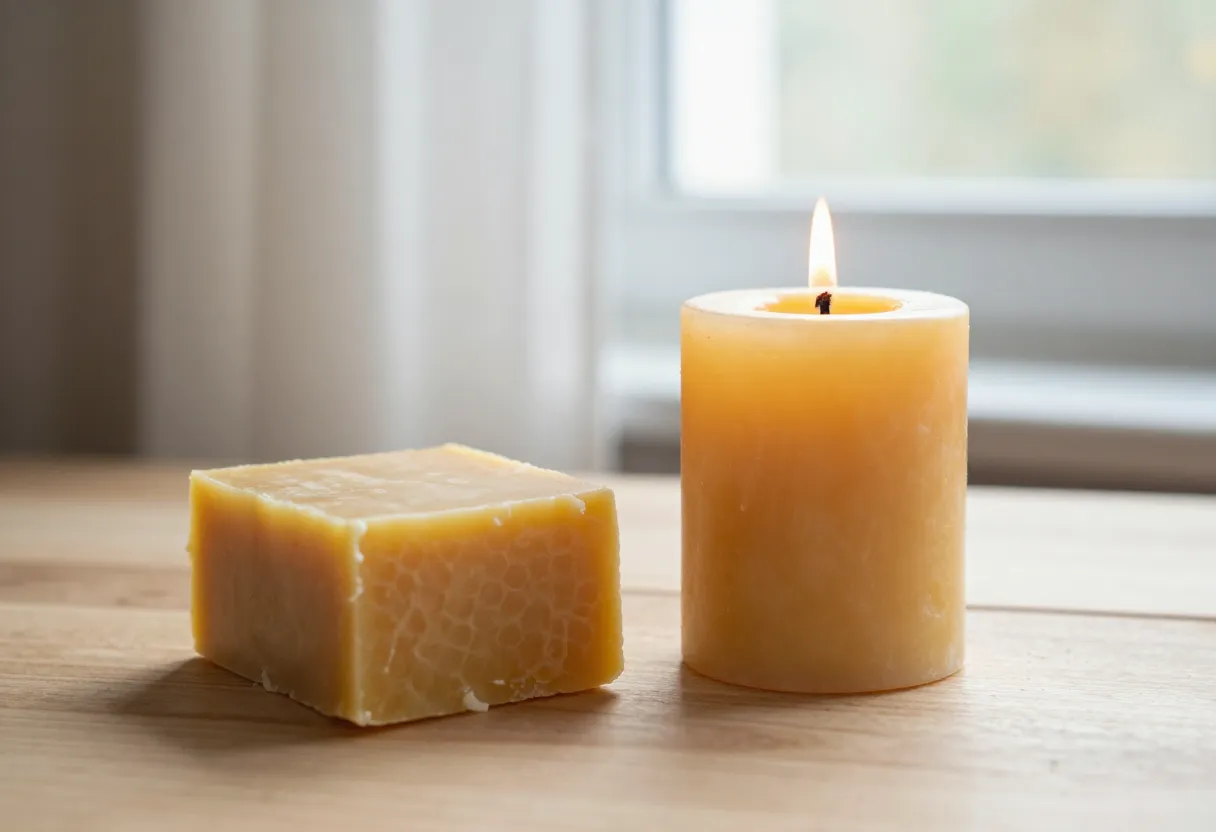
Beeswax comes from honeybee comb. It’s naturally golden yellow, and it smells faintly of honey. It’s the traditional choice for tapers, pillars and rolled candles.
Strengths
- Natural and renewable, with a distinct honey scent.
- Burns slowly and holds its shape well because of its high melting point.
- A good choice for tapers and pillars, and as part of a blend.
Watch-outs
- More expensive than the other waxes here.
- The natural scent can compete with delicate fragrance oils.
- It generally needs a larger wick than softer waxes.
- Not vegan.
Palm, gel and specialty waxes
Palm wax is hard and forms a distinctive crystalline, feathered pattern as it cools. It’s popular for decorative pillars. Because palm oil production raises environmental concerns, look for wax sourced from a certified supplier if that matters to you.
Gel wax is not technically a wax. It’s a clear gel made from mineral oil and a polymer, used for see-through candles with embedded decorations. It burns hotter than most waxes, so you need a container rated for it and wicks made for gel candles.
Other waxes you may see include rice bran, sunflower, and carnauba (often used as a hardener). Each has its own quirks. Treat them as advanced options.
Blends and additives
Most waxes sold as “soy” or “coconut” are actually blends, tuned by the manufacturer to do one job well. Some makers also add small amounts of additives such as stearic acid or polymers to adjust hardness, opacity, scent retention or burn behavior.
Don’t add anything until you understand how your wax behaves on its own. Additives change the wick you need and the temperatures you pour at, and they’re easy to overuse. If your supplier recommends one, use their amount.
Match the wax to the candle
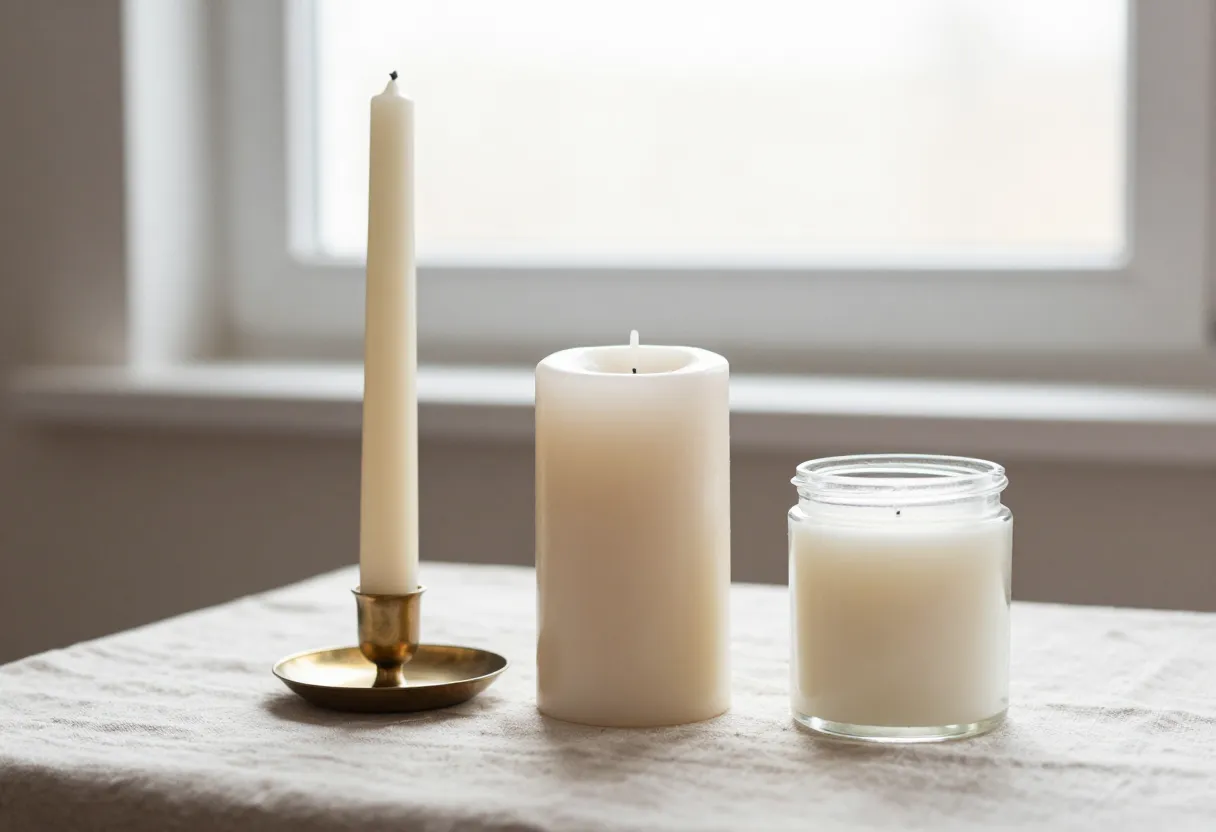
Different candle types need different wax properties. A container candle relies on soft wax that clings to glass, while a free-standing pillar needs wax that’s hard enough to hold its shape as it burns.
Use this chart to narrow down a starting choice.
How to compare waxes
When you’re reading a supplier’s description or data sheet, these are the properties worth paying attention to.
| Property | What it tells you |
|---|---|
| Intended use | Container, pillar, votive, tart or all-purpose. The most important line on the sheet. |
| Melting point | The temperature at which the wax turns liquid. Higher is harder and usually needs a larger wick. |
| Recommended pour temperature | The range that gives the best finish and adhesion. |
| Fragrance load | The maximum percentage of fragrance oil by weight the wax can hold. |
| Scent throw | Cold and hot throw ratings from the supplier. Treat these as a guide, not a guarantee. |
| Suggested wicks | Often listed by container diameter. A starting point for your own testing. |
| Additive content | Whether it’s a pure wax or a blend with additives built in. |
Wax forms
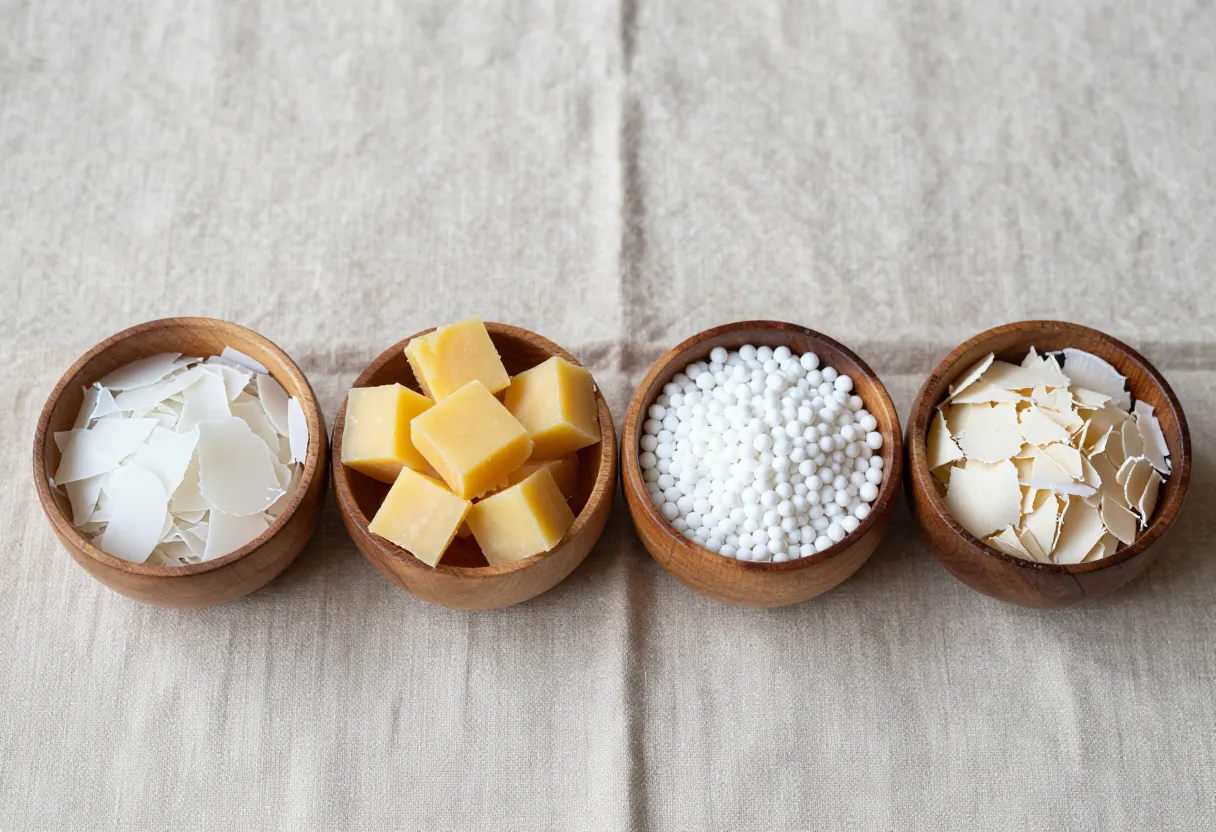
Wax is sold as flakes, pellets, beads, slabs and blocks. The form doesn’t change how the wax burns. It changes how easy it is to weigh and melt. Small flakes and pellets melt quickly and scoop easily. Slabs and blocks are usually cheaper per pound but need to be cut or broken up. The photo at the top of this guide shows several of these forms.
Buying and storing wax
- Buy from a candle supplier. Wax made for candles comes with a data sheet. Craft-store or repurposed wax often doesn’t.
- Buy small first. Get a few pounds of a new wax to test before committing to a bulk order.
- Keep it clean and sealed. Wax absorbs odors and dust. Store it in a closed container, away from dirt.
- Keep it cool and out of the sun. Heat softens wax and can damage its finish.
- Protect it in transport. Soft waxes can deform in a hot vehicle, so don’t leave a finished candle or a box of wax in the car.
How to test a new wax
Never switch waxes by guessing. A small test batch tells you more than any description.
- Read the supplier’s data sheet for temperatures, fragrance load and suggested wicks.
- Pour two or three small candles in the same container with the recommended wick and one size above or below.
- Use the same fragrance and load for each, and write down everything: wax, wick, fragrance, load, melt, pour and ambient temperature, and the date.
- Cure for the time the supplier recommends.
- Burn test each candle. See Your First Candle for how.
- Compare the results, pick the best wick, and change only one thing at a time from then on.
Waxes at a glance
| Wax | Best for | Main strengths | Main watch-outs |
|---|---|---|---|
| Soy | Container candles, beginners | Plant-based, forgiving, affordable | Frosting, wet spots, soft |
| Coconut blend | Premium containers | Creamy finish, good adhesion and throw | Higher cost, heat-sensitive |
| Paraffin | Containers, pillars, votives | Strong throw, vivid color, many grades | Petroleum-derived, soot if over-wicked |
| Beeswax | Tapers, pillars, natural candles | Natural, slow burn, holds shape | Cost, strong natural scent, larger wick |
| Palm | Decorative pillars | Hard, crystalline pattern | Sourcing concerns |
| Gel | Clear, decorative candles | Transparent, holds decorations | Needs rated glass and special wicks |
Common questions
Is soy wax better than paraffin?
Neither is better in every case. Soy is a plant-based, forgiving wax that’s easy for beginners. Paraffin often gives a stronger scent and brighter color. Choose based on what you want from the candle and what matters to you.
Is “natural” wax safer?
Not automatically. Any candle burns open flame and gives off combustion products. Safety comes mostly from correct wicking, sensible fragrance loads, good containers and careful use, regardless of the wax.
Can I mix different waxes?
You can, but the result has its own melting point and behavior, so the wick and temperatures may need to change. Test a small batch before you pour a full run.
Can I reuse leftover wax?
Yes, if it’s clean and you know what it is. Strain out debris, don’t combine unknown waxes, and expect the fragrance to be whatever you had in it.
Why does my soy wax frost?
Frosting is the wax crystallizing as it cools, and it’s a natural trait of soy. It’s cosmetic. Pouring at the recommended temperature, avoiding sudden temperature swings, and using a blend can reduce it.
Where to go next
Now that you know the waxes, the next piece is the wick, which is what makes a good wax burn well. Sizing wicks will be covered in an upcoming guide. Until then, record your pours and your burn tests, and your notes will teach you the rest.
Hard and soft, spark and glow. The right wax is the one that fits the candle.
Questions or corrections? Send a note. Ready for the next step?Browse more guides.