Guides Containers
Candle Containers Explained: Choosing, Measuring and Preparing
Which containers are safe for candles, how glass, tin and ceramic compare, how to measure and prep a vessel, and how to fix cracking, wet spots and overheating.
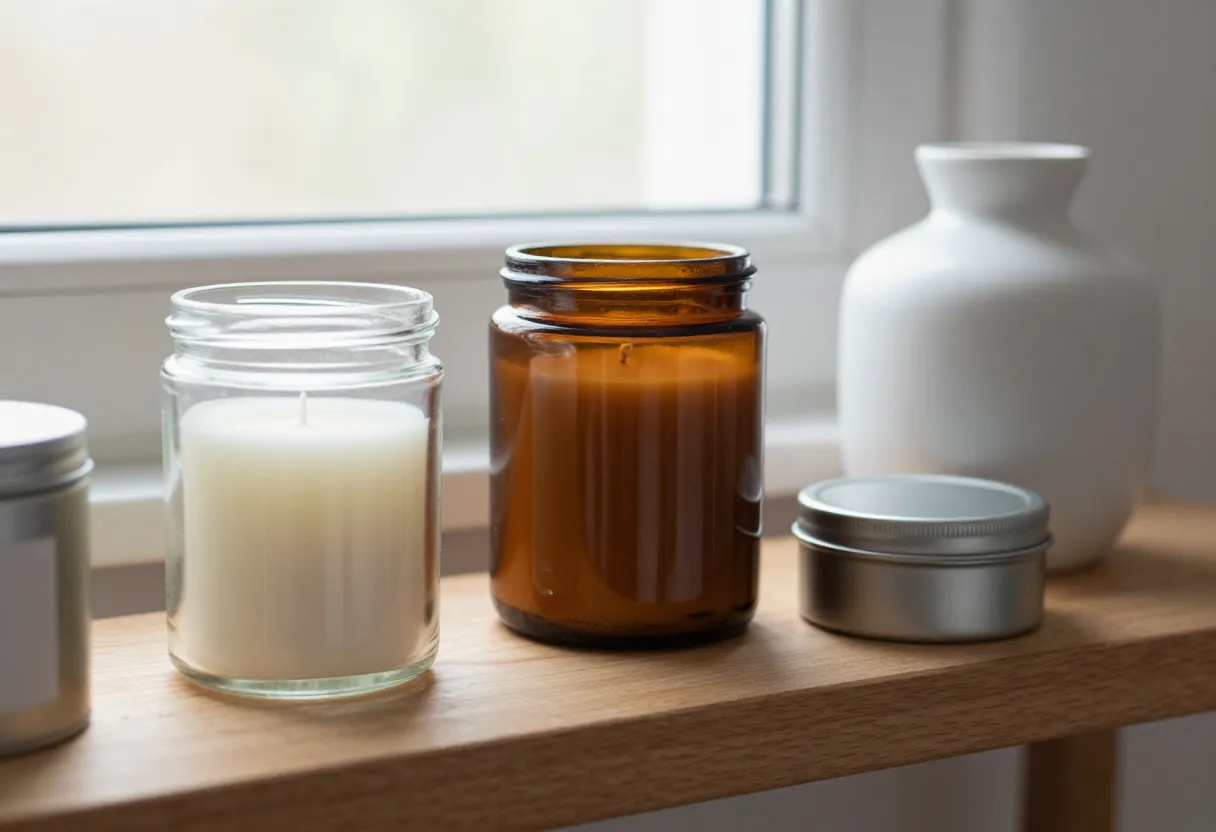
The container is the part of a candle that people keep. It holds the wax, shapes the burn, protects whatever the candle sits on, and defines how the finished candle looks on a shelf. It’s also the part most likely to cause a real safety problem if you choose it carelessly, because a candle burns inside it for hours.
This guide covers how to pick a container that’s safe, how the common materials and shapes behave, how to measure what you’ve got, and how to prepare it before you pour. It builds on Your First Candle and Candle Wicks Explained, because the container decides the wick.
Why the container matters
- Safety. A container has to survive hot wax now and a burning flame later without cracking, melting or leaking.
- The wick. Wick size comes from the container’s diameter, so the container sets your starting point.
- The burn. Wall thickness and material change how much heat the candle holds, which changes how the wax melts.
- Adhesion and finish. How clean, warm and smooth the container is affects wet spots and how the wax looks against the glass.
- Brand and look. To a customer, the container is half of what the candle is.
What makes a safe candle container
A good candle vessel is:
- Heat-resistant. It’s made to hold hot wax and a burning flame. Candle suppliers sell vessels made for this.
- Thick-walled and sturdy. Thin glass is much more likely to crack from heat.
- Free of cracks, chips and scratches. Even a small flaw can become a break under heat.
- Stable. It has a flat base and won’t tip.
- Free of plastic, paint that can burn, wood, fabric or anything flammable on or near the flame.
- Sized and shaped to burn well. A wide enough opening to let the melt pool form and watch.
Container materials
| Material | Strengths | Watch-outs |
|---|---|---|
| Glass | Classic and clean-looking. Lets you see the melt pool and wax adhesion. | Can crack from thermal shock or thin walls. Shows wet spots and frosting. |
| Metal tins | Durable, light, and good for shipping and travel. | Heat up quickly. The lid and body can get very hot. Can dent. |
| Glazed ceramic | Attractive, heavy, and holds heat. | Must be glazed on the inside so wax doesn’t soak in. Quality and heat tolerance vary. |
| Concrete and stone | Modern, textured look. | Porous. Need sealing or a liner or wax can seep out. Heavy. |
| Wood and other natural vessels | Beautiful, rustic. | Burn and char. Not suitable unless lined with a proper heat-safe liner. |
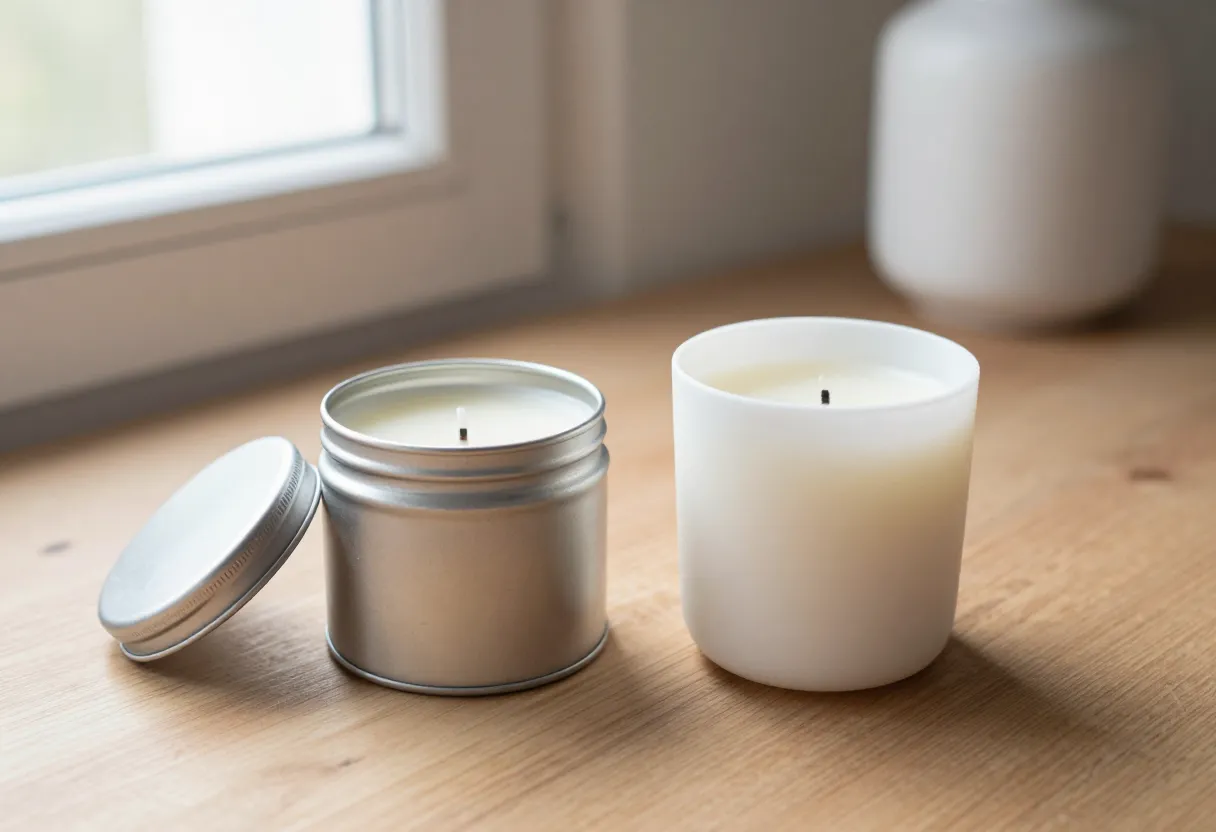
For a first candle, thick clear glass or a metal tin made for candles is the safest, simplest choice.
Shape and size
The shape of the container changes how the wax melts as it burns down.
- Straight-sided vessels give the most even melt pool and the simplest wick sizing.
- Tapered or wide-topped vessels can work, but the wick has to be sized for the widest point and the burn changes as it goes down.
- Narrow-necked vessels are hard to burn well. The melt pool is hard to see, heat builds up, and the wax can tunnel.
Size matters too. Wide containers need larger wicks or several wicks. Very large vessels burn a long time and take careful testing. A small to medium straight-sided jar is the easiest starting point.
Measure your container
Measure before you buy wick or wax. These are the numbers to find.
- Inside diameter at the top, measured across the inside of the opening. Wick charts are organized by this number.
- Inside depth. Useful for choosing wick length and for judging how long a candle will burn.
- Fill level. Plan to fill to about half an inch below the rim, leaving headspace.
- Volume. Fill the container with water to your planned fill line, then weigh the water in grams. One milliliter of water weighs about one gram, so the weight is a reliable measure of volume. Multiply that weight by about 0.86 for a soy wax estimate of how much wax you’ll need, since wax is less dense than water.
Inspect and prepare
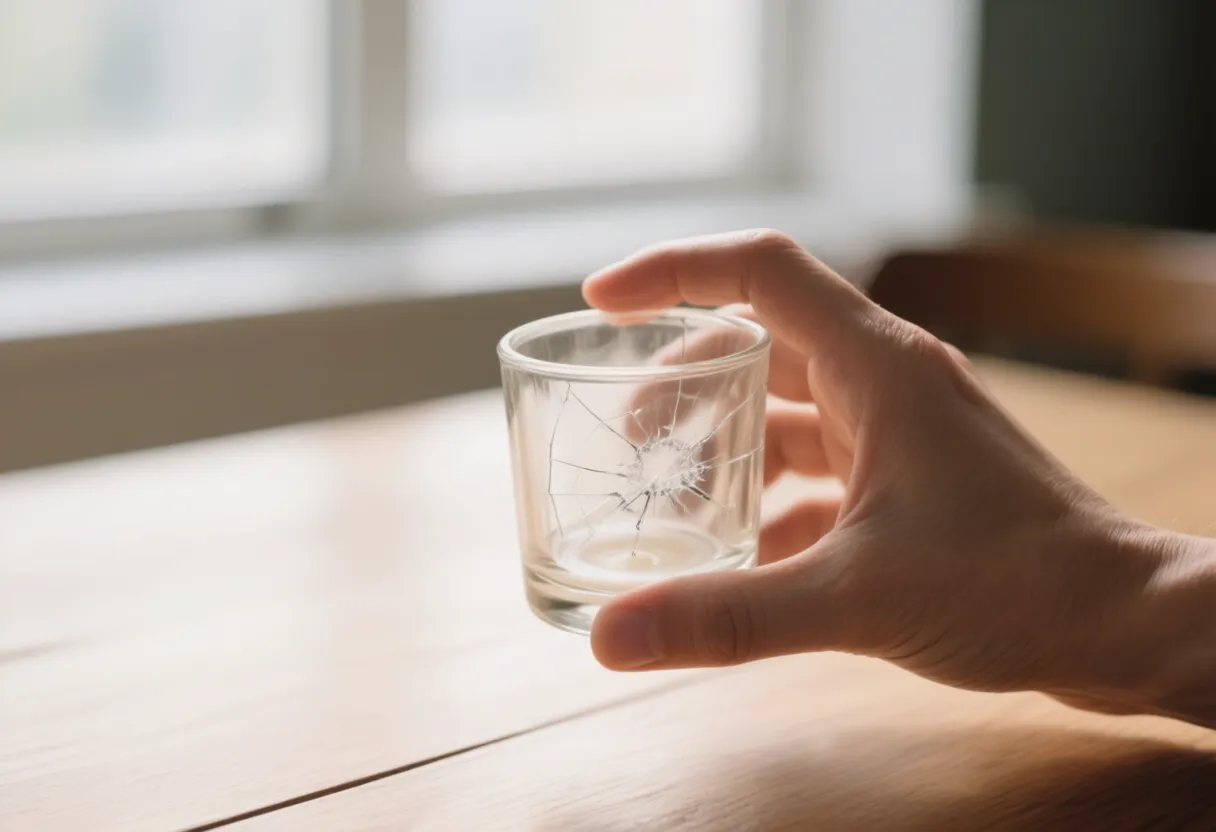
Preparing a container takes a few minutes and prevents most container-related problems.
- Inspect it. Look for cracks, chips, bubbles in thin spots, and rough edges. If in doubt, don’t use it.
- Remove labels and residue. Soak off stickers and clean off any adhesive.
- Wash and rinse with hot soapy water, and rinse well.
- Dry completely. Water in a container causes spatter, wet spots and poor adhesion. Let it air dry or wipe it dry with a lint-free cloth.
- Bring it to room temperature, and if it’s cold, warm it gently. Pouring hot wax into a very cold glass container can cause thermal shock and cracking.
- Secure the wick to the center of the bottom, as described in the wicks guide.
Match the wick to the container
The wick is chosen from the container’s diameter, the wax and the other ingredients. Use the inside diameter you measured, then follow the process in Candle Wicks Explained and test. A change in container, even to a similar one, is a reason to retest the wick.
Cleaning and reusing candle jars
You can reuse a candle jar from a finished candle for your own next batch, as long as it’s undamaged and clean.
- Remove leftover wax by wiping it out with paper towels while it’s still warm, or by setting the jar in a pot of hot water until the wax melts and pouring it into a disposable container.
- Never pour wax down the drain. It hardens and clogs pipes.
- Wash with hot soapy water, rinse and dry thoroughly.
- Inspect again for cracks or heat damage before you reuse it.
Lids, labels and packaging
- A lid keeps dust out and helps protect the surface and fragrance of a candle while it cures and is stored. Tins usually come with lids, and many glass jars can take one.
- Warning labels are important if you sell candles. Candle fire-safety labeling standards exist (look up ASTM F2058), and the rules that apply to you depend on where you live and sell.
- Place labels on the bottom or side of the vessel, away from the flame and out of the heat.
- Shipping is easier with tins and sturdy packaging. Glass needs good padding.
Troubleshooting container problems
| Problem | Likely cause | What to try |
|---|---|---|
| Glass cracks when you pour | Thermal shock, or thin or flawed glass | Warm the vessel gently first. Use thicker, candle-rated glass. |
| Glass cracks while burning | Too much heat from an oversized wick, or a flawed vessel | Use a smaller wick. Replace the container. |
| Container gets very hot | Wick too large, or thin metal tin | Retest with a smaller wick. Don’t touch a hot container. |
| Wet spots against the glass | Cold container or fast cooling | Warm the jar slightly, pour at the right temperature, avoid drafts. |
| Wax pulls away from the sides | Normal shrinkage as the wax cools | Cosmetic. Try a slower cool and a warmer container. |
| Leaking or seeping through ceramic or concrete | Porous or unglazed material | Use glazed ceramic or add a heat-safe liner. |
| Rust or corrosion in a tin | Moisture | Dry thoroughly and store tins in a dry place. |
| Scorch marks on the surface under the candle | Heat transfer | Always burn on a heat-safe surface. |
Common questions
Can I use a mason jar?
Some makers do, but standard canning jars aren’t made for burning candles, and their glass can vary. If you use one, choose a sturdy jar from a candle supplier if possible, test carefully, and never use a chipped or cracked jar.
Can I use a teacup or a thrifted bowl?
You can for your own use if it’s solid, heat-safe and glazed on the inside, and you test it carefully. For candles you sell, use vessels from a candle supplier so you know what they’re rated for.
How full should I fill the container?
Leave about half an inch of headspace below the rim, and make sure the flame will have plenty of room.
Do colored or frosted glass jars work differently?
Not in how they burn, but dark or colored glass hides the melt pool and wet spots, which can make testing harder. Test in clear glass first.
What size container should I start with?
A small to medium straight-sided glass jar or tin is the easiest to wick and test.
Where to go next
With wax, wick, fragrance, dye and a container sorted, you have every ingredient. The next guide will cover candle safety in more depth, and a troubleshooting guide will follow. Until then, inspect every container, test every new one, and never trade safety for looks.
A beautiful candle is only worth making if it’s safe to burn.
Questions or corrections? Send a note. Ready for the next step?Browse more guides.