
Guides Fragrance & Dye
Candle Dye Explained: Coloring Wax Without Wrecking the Burn
Types of candle dye, how much to use, when to add it, how to mix and test colors, and how to avoid clogged wicks, speckles and fading.
Color is the first thing a customer sees and the part of a candle that’s easiest to get wrong without realizing it. A beautiful color can hide a wick that’s quietly clogging, and a color that looked perfect in the pitcher can turn chalky, streaky or faded once the wax sets.
This guide covers how candle dye works, which kinds to use, how much to add, when to add it, and how to test a color before you commit. It pairs with Candle Fragrance Explained and Candle Wicks Explained, because dye, fragrance and wick all affect each other.
How dye behaves in wax
Wax is cream-white or off-white, and most candle dyes are concentrated, so a very small amount goes a long way. Dye also looks different in each stage:
- Liquid wax looks darker and more transparent.
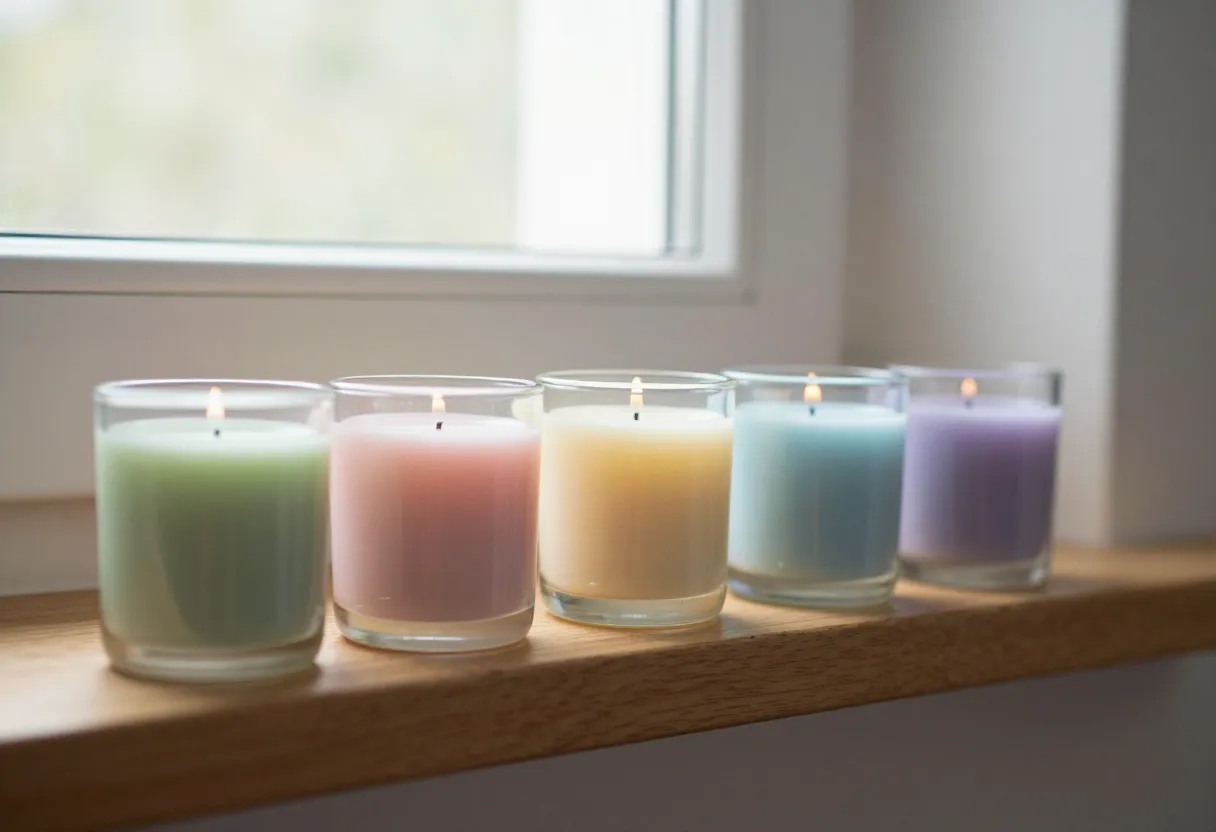
- Solid, cured wax looks lighter, more opaque and usually more muted.
- Different waxes show color differently. Paraffin is whiter and takes color brightly. Soy is creamier, so colors come out softer. Beeswax is already golden and shifts every color toward yellow.
That’s why you should judge color on a cured test candle, not in the pitcher.
Types of candle dye
| Type | What it is | Notes |
|---|---|---|
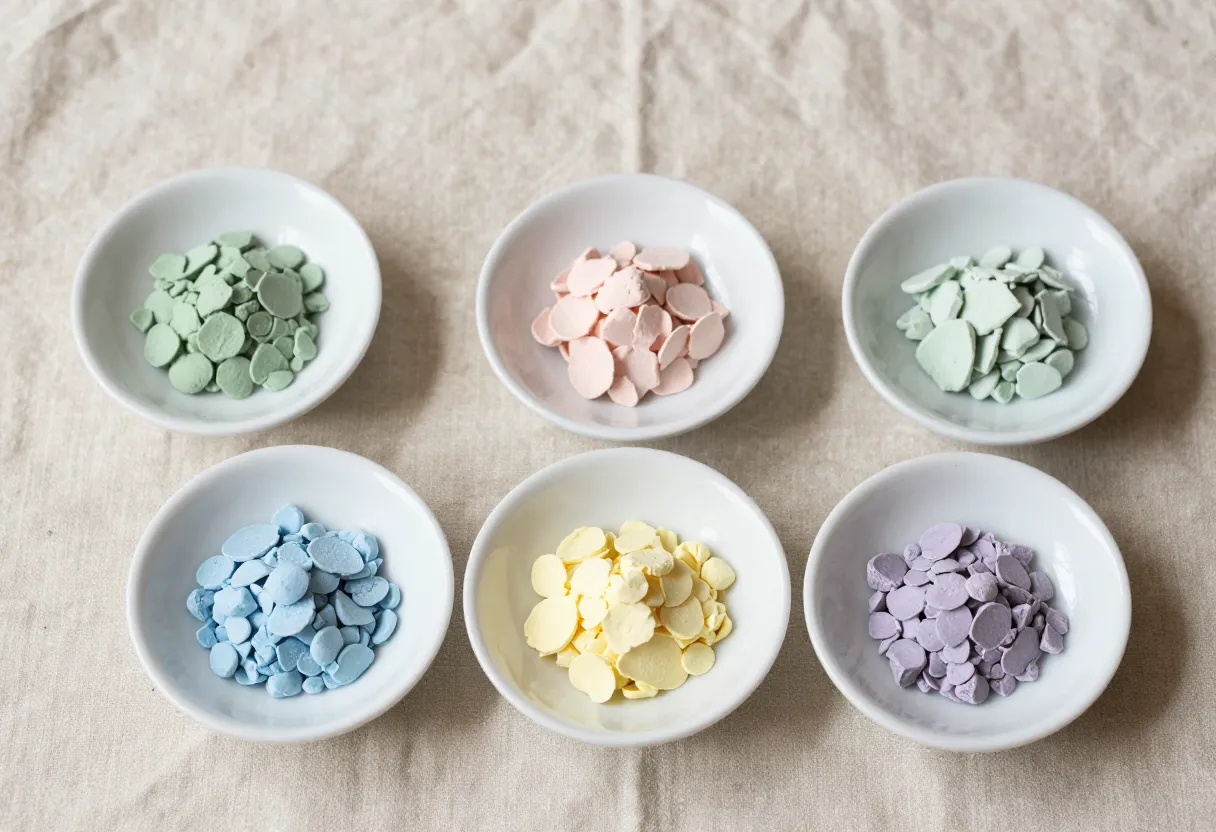
| Dye chips or blocks | Pressed, pre-measured dye | Easy to dose by the piece. Must melt completely to avoid specks. |
| Liquid dye | Concentrated liquid colorant | Easy to blend and dose by drops or weight. Can stain surfaces and containers. |
| Dye flakes or powder | Concentrated dye in dry form | Very strong. Dose by weight and dissolve fully. |
| Pigments and mica | Fine particles that stay suspended rather than dissolving | Can settle and clog wicks in burning candles. Mainly used in wax melts or for decorative surface effects. |
Candle dye is made to dissolve in wax. Pigments don’t dissolve, so they behave very differently and need extra care around the wick.
How much dye to use
Dyes are very concentrated, and the right amount depends on the product, the wax and how deep you want the color. Your dye supplier gives a recommended amount, often per pound of wax, and it’s usually a small fraction of one percent of the wax weight.
- Start with less than you think you need. You can always add more. You can’t take it out.
- Weigh it when you can, especially with powders and concentrated liquids.
- Record the amount. If you like the result, you’ll want to repeat it.
Mixing colors
Candle dye mixes the way paint does. Red and yellow make orange, yellow and blue make green, and blue and red make purple. Because wax is not pure white, results are softer than you might expect.
A few tips for building your own colors:
- Mix a tiny test batch of wax rather than adjusting a full pitcher.
- Write down every addition, in grams or drops, so you can repeat the recipe.
- To make a color softer or more natural, add a very small amount of a complementary color rather than going darker.
- Remember that fragrance can tint the wax too. Vanilla-type oils can add a tan or brown tone that changes the final color.
When and how to add dye
Add dye while the wax is fully melted and hot enough to dissolve it, following your supplier’s temperature guidance.
- Melt the wax in a double boiler.
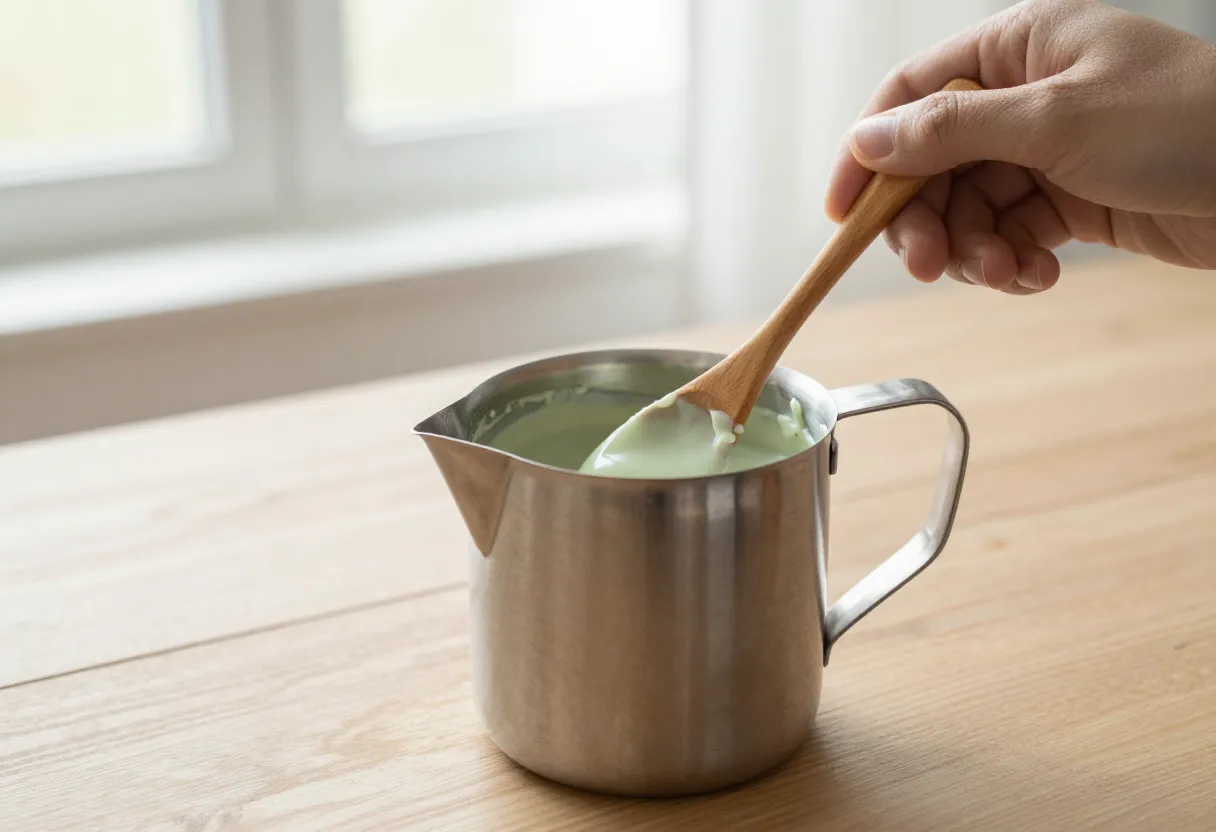
- Add the dye to the melted wax. For chips, drop them in. For liquids and powders, weigh them in.
- Stir until completely dissolved. There should be no specks, streaks or undissolved bits at the bottom.
- Check the color by dipping a clean white spoon or putting a drop on a white plate and letting it set.
- Add fragrance at its temperature, then pour as usual.
Dye and your wick
Dye is made of solid particles, and those particles can collect in the wick. A heavy dye load, a very dark color, or a dye that isn’t fully dissolved can slow the flow of wax up the wick, shrinking the flame and causing the wick to mushroom.
- Use as little dye as you can to get the color you want.
- Retest the wick whenever you add dye or change the amount. Dark colors often need a different wick size than uncolored wax.
- Make sure the dye is fully dissolved before you pour.
See Candle Wicks Explained for how to run a wick test.
Test a color
- Melt a small test batch of the same wax you’ll use.
- Add a measured amount of dye and record it.
- Pour a small test candle or a thin test pour in a clear cup.
- Let it fully set and cure, since color shifts as the wax cools and hardens.
- Look at it in natural light, and compare it with your target color.
- Adjust the amount, and test again. Then burn test a candle at the final color to check the wick.
Troubleshooting dye problems
| Problem | Likely cause | What to try |
|---|---|---|
| Specks or flecks of color | Dye not fully dissolved | Melt hotter within the wax’s limits, stir longer, or use a different dye form. |
| Streaks or uneven color | Poor mixing | Stir thoroughly before pouring. |
| Color pools at the bottom | Pigment settling before the wax sets | Stir before and during the cool-down, or use a dissolving dye. |
| Color looks pale once cured | Normal lightening as wax solidifies | Test on a cured candle and add a little more dye. |
| Dark colors look frosty or patchy | Frosting, common in soy | Pour at the recommended temperature, avoid sudden temperature changes, or use a wax blend that frosts less. |
| Wick clogs or mushrooms | Too much dye or undissolved dye | Reduce the dye. Retest the wick. |
| Color fades over time | Light exposure | Store candles out of direct sunlight, and consider a UV-stable dye. |
| Color bleeds into layers or the jar | Some dyes migrate | Use a dye suited to the wax and test layered candles. |
| Wax turns tan or brown | Fragrance components such as vanillin | Choose a different oil or accept the tint. |
Safety and cleanup
- Wear gloves and protect surfaces. Concentrated dye stains hands, countertops and tools.
- Keep dye away from children and pets, and follow the supplier’s safety data.
- Dedicate equipment to wax and dye. Don’t use the same pitchers and spoons for food.
- Clean spills while the wax is warm, and use paper towels to wipe tools before the wax hardens.
Common questions
How do I make a dark color without clogging the wick?
Use the smallest amount of dye that gets you there, make sure it’s completely dissolved, and retest your wick at that color. Very dark colors may need a larger wick.
Can I use mica or pigment powders?
They don’t dissolve, so they can settle and clog wicks in burning candles. They’re better for wax melts and decorative touches than for the body of a burning candle.
Why does my candle look different from the pitcher?
Liquid wax looks darker and clearer. Color changes as it cools, so judge on a cured test candle.
Will my colors fade?
Many dyes fade in strong light over time. Store candles out of direct sun, and test lightfastness if you sell in a bright space.
Can I color a candle without any dye?
Some makers use natural colorants, but they can burn, discolor, or behave unpredictably in a flame. Use colorants made for candles, and test them thoroughly.
Where to go next
You now have the main ingredients: wax, wick, fragrance and dye. The next guides will cover containers and troubleshooting. In the meantime, make a small color test batch, keep your notes, and trust the cured candle over the pitcher.
Color is the finish. Get the burn right first, then make it beautiful.
Questions or corrections? Send a note. Ready for the next step?Browse more guides.