
Guides Fragrance & Dye
Candle Fragrance Explained: Oils, Load and Scent Throw
Fragrance oils vs essential oils, how to calculate fragrance load, flash points, cold and hot throw, blending, curing and fixing weak or overpowering scent.
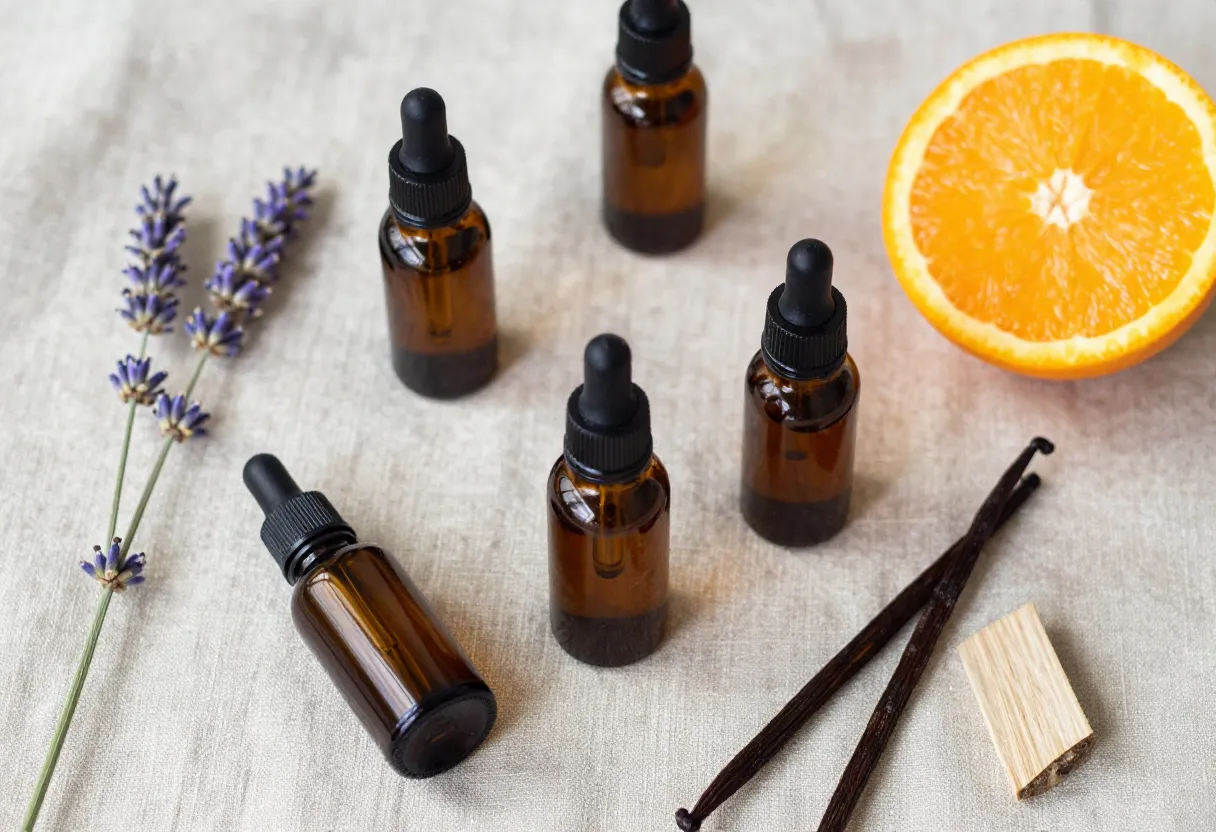
Scent is what most people notice first about a candle, and it’s the part beginners find hardest to get right. A candle can smell wonderful in the jar and disappear once it’s lit, or fill the room with a scent so strong it gives you a headache. Neither is an accident. Both come from a handful of choices you control.
This guide explains how fragrance works in a candle: what to buy, how much to use, when to add it, and how to fix a candle that smells too faint or too strong. It builds on Your First Candle, Candle Waxes Explained and Candle Wicks Explained, since scent depends on all three.
What fragrance does in a candle
A scented candle works in two ways. The unlit candle gives off a faint aroma called cold throw. When you burn it, the melted wax pool releases fragrance into the air, which is called hot throw. A great candle does both. Because the melt pool has to get hot enough to release the scent, the wax, the wick and the fragrance all affect how well it works.
Types of fragrance
| Type | What it is | Notes |
|---|---|---|
| Fragrance oils | Blends of aroma compounds, natural, synthetic or both, designed for a purpose | The standard for candle making. Wide range of scents, reliable throw, and supplier data for safe use. |
| Essential oils | Oils distilled or pressed from plants | Natural, but many have a weaker throw in candles and vary in flash point. Often costly. |
| Natural or botanical blends | Fragrance made from natural sources, sold for candles | A middle ground. Quality and throw vary by supplier. |
For almost every candle maker, the right starting point is fragrance oil sold specifically for candles by a candle supplier. Perfume, body oil, cooking extracts and craft-store scents are not made to be burned and can be unsafe or simply won’t perform.
How a scent is built
Perfumers describe a fragrance as layers of notes that appear over time. Understanding the layers helps you pick oils and blend them.
- Top notes are the first thing you smell, like citrus or mint. They evaporate quickly.
- Heart notes form the main character, such as flowers, fruit and spices.
- Base notes are the rich, heavy notes like vanilla, amber, wood and musk that last the longest.
Many fragrance oils are already a balanced blend of all three. The supplier’s description usually lists the notes.
Cold throw and hot throw
Cold throw is the smell of the unlit candle, which is what a customer notices when they lift the lid. Hot throw is how well the candle scents a room while burning. They don’t always match. A candle with a great cold throw can have a weak hot throw if the wick is too small to heat the pool, and vice versa.
Judge both, and judge them properly: cold throw after the cure, and hot throw after a burn test of at least an hour or two, when the melt pool has reached its full width.
Fragrance load
Fragrance load is the percentage of fragrance oil by weight compared to the wax. It’s the single most important number for scent strength.
Fragrance weight = wax weight × load percentage
Always measure with a scale in grams. Fluid ounces and ounces by weight are not the same thing.
| Wax weight | At 6% | At 8% | At 10% |
|---|---|---|---|
| 100 g | 6.0 g | 8.0 g | 10.0 g |
| 195 g (one 8 fl oz soy jar) | 11.7 g | 15.6 g | 19.5 g |
| 454 g (1 pound) | 27.2 g | 36.3 g | 45.4 g |
Two things to remember:
- More isn’t always better. Every wax can only hold so much fragrance. Past its limit, the extra oil won’t improve the scent and can pool on the surface (called “sweating”), cause a poor burn, and create a fire risk.
- Start low. Begin at the low end of your wax’s recommended range and work up only if you need a stronger scent.
Choosing a fragrance oil
Not every fragrance oil works in every candle. Before you buy, check:
- Made for candles. The product description should say so.
- Safety Data Sheet (SDS). A good supplier provides one, along with the flash point and usage guidance.
- Recommended usage rate. The maximum percentage the oil can safely be used at.
- Wax compatibility. Some oils are listed as tested for soy, paraffin or other waxes, with notes on performance.
- Discoloration and other quirks. Some oils, such as those containing vanillin, can turn the wax tan or brown over time.
- Compliance information. Ask whether the supplier provides an IFRA certificate, especially if you plan to sell candles.
Buy small sizes of new scents first. A fragrance that smells wonderful in the bottle may behave very differently in wax.
Flash point and temperature
The flash point is the lowest temperature at which an oil’s vapors can ignite. It’s listed on the SDS, and it varies widely between fragrance oils.
Add fragrance below the flash point, and at the temperature your wax supplier recommends. Many soy container waxes call for adding fragrance around 185°F, but that is an example and not a rule. If the wax is too hot, some of the fragrance evaporates, weakening the scent and creating a hazard. If it’s too cool, the oil may not bond with the wax properly, leading to sweating and weak throw.
Adding fragrance
- Weigh the wax and calculate the fragrance weight.
- Melt the wax in a double boiler to the temperature your supplier specifies.
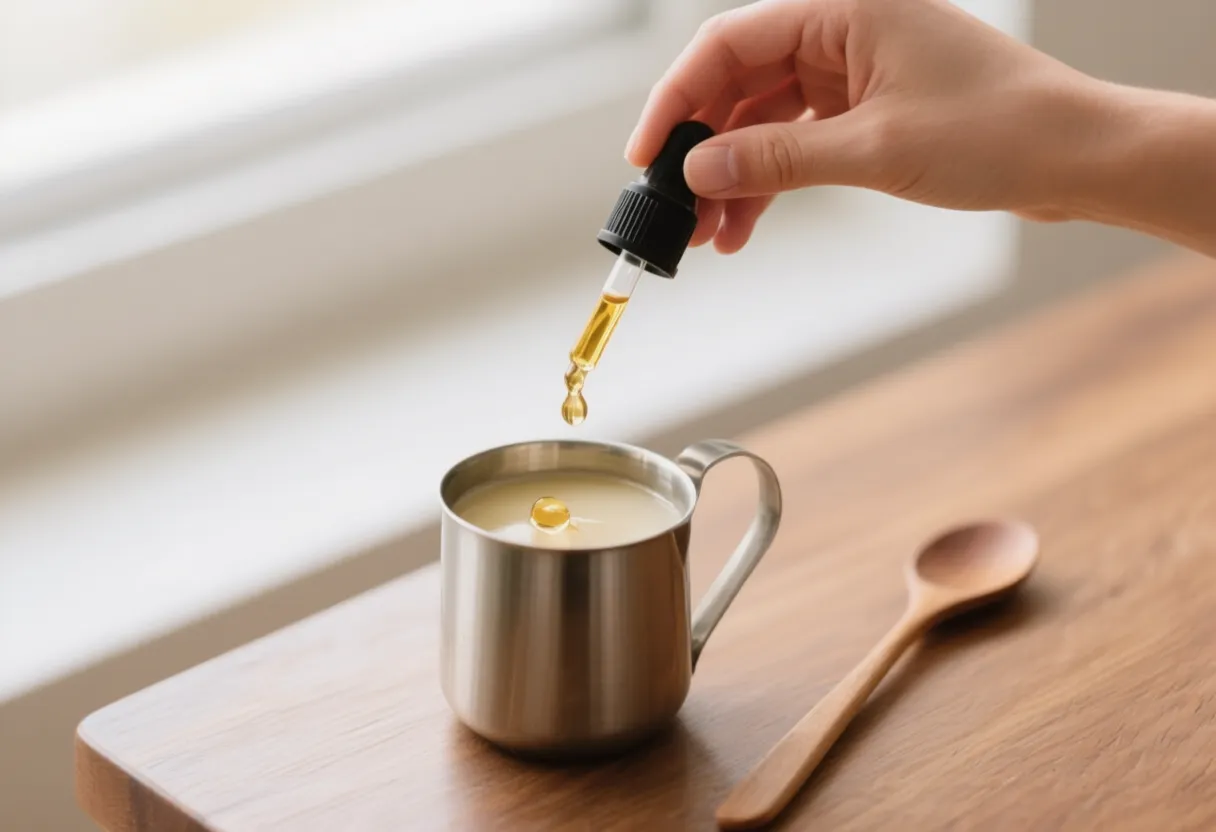
- Weigh the fragrance oil in a separate clean cup or directly into the pitcher on the scale.
- Remove the wax from the heat. Pour the fragrance in.
- Stir slowly and thoroughly for about two minutes, scraping the sides and bottom so the oil is fully mixed without whipping in air.
- Cool to the pour temperature and pour.
Cure and scent
Scent keeps developing after the wax sets. During the cure, the fragrance settles into the wax and the candle’s throw becomes fuller and more even. A candle that smells faint on day one often improves by the end of the cure time your wax recommends. This is why you should never judge a candle right after pouring.
Blending scents
You can combine fragrance oils to make your own signature scent. A few rules keep it manageable:
- Blend in small batches and weigh every oil, so you can repeat it.
- Write down the ratios. Something like 60 percent vanilla, 30 percent amber, 10 percent cedar is reproducible. “A bit of this and that” isn’t.
- Let the blend rest for a day or so in the bottle before testing, as the oils meld.
- Test it in wax. The blend may smell different once cured.
Test a new fragrance
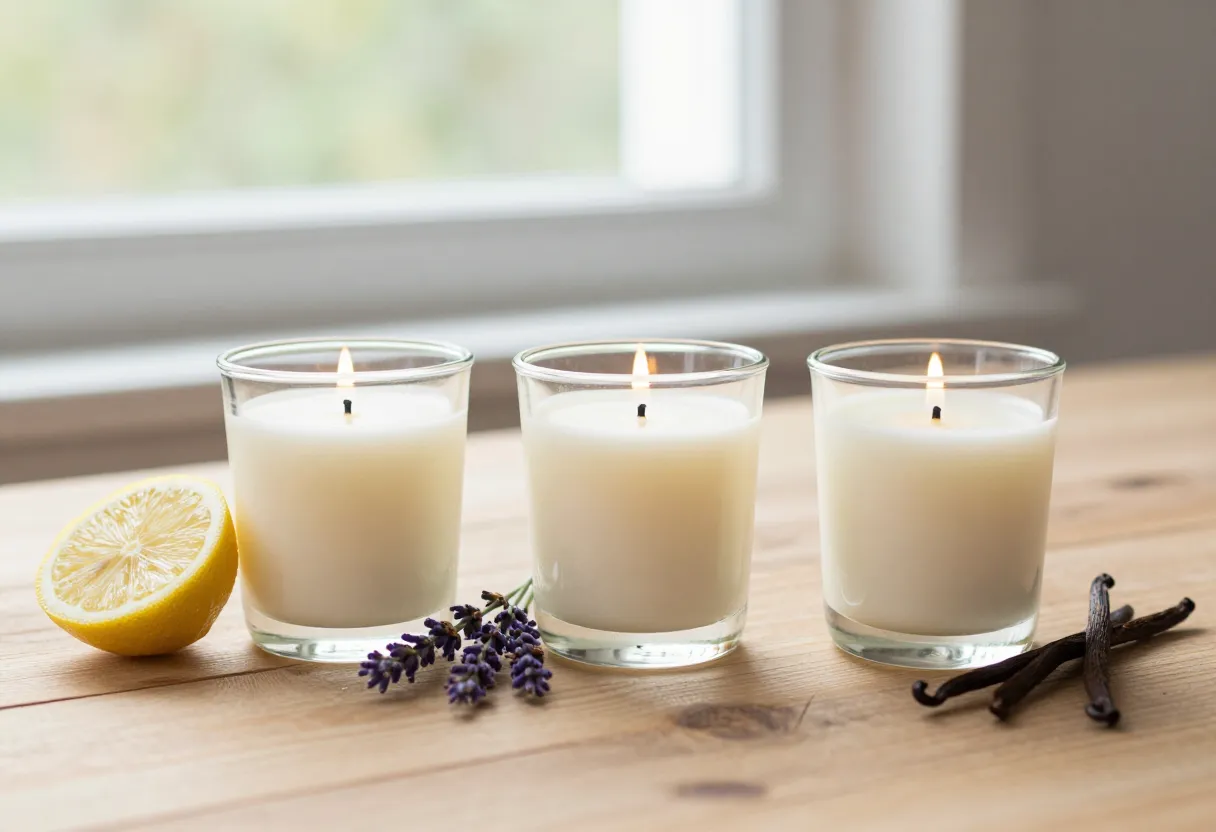
- Make a small test batch in your usual wax, container and wick.
- Pour two or three candles at different loads, such as 6%, 8% and 10%, staying within your wax’s maximum.
- Label everything and record the wax, wick, fragrance, load and temperatures.
- Cure for the time your wax calls for.
- Smell the cold throw of each, then burn test them as described in Your First Candle.
- Note how the scent fills the room after one to two hours. Choose the load that gives a good scent without sweating or a poor burn.
Change one variable at a time. If you alter the fragrance and the wick together, you won’t know which one made the difference.
Troubleshooting fragrance problems
| Problem | Likely cause | What to try |
|---|---|---|
| Weak cold throw | Not cured, too little fragrance, added too hot | Cure longer. Check the load and the temperature. |
| Weak hot throw | Wick too small, load too low, or the oil isn’t suited to the wax | Retest the wick. Try a slightly higher load within the limit. |
| Scent too strong | Load too high, or an overpowering oil | Lower the load. Choose a lighter oil. |
| Oil beads on the surface (sweating) | Over the wax’s limit, or oil added too cool | Reduce the load. Add at the correct temperature and stir well. |
| Wax turns tan or yellow | Vanillin or other discoloring components | Choose a different oil or expect the color change. |
| Smoky or sputtering burn | Load too high | Reduce the load. Retest the wick. |
| Scent fades quickly | Top-note-heavy oil, or candle stored in heat or light | Choose oils with more base notes. Store candles cool and out of sun. |
Storing fragrance oils
- Keep bottles tightly closed, in a cool, dark place.
- Avoid sunlight and heat, which degrade the scent.
- Label every bottle with the name and the date you bought it.
- Fragrance oils keep for a long time, but they do age. Check for changes in scent or color before using old stock.
Safety and selling
- Use only fragrance made for candles.
- Keep oils away from children and pets, and don’t let them touch skin or eyes. Follow the SDS.
- If you sell candles, check the labeling and safety rules that apply where you live and sell. Candle warning labels and fragrance information can be required.
- Burn candles in a well-ventilated room, and stop using a candle if it causes irritation.
Common questions
How much fragrance oil should I use?
Start at the low end of your wax’s recommended range, often around 6 percent, and never go above its stated maximum.
Can I use essential oils instead?
You can, but many give a weak throw in candles, and their flash points vary. Check the flash point, test carefully, and use suitable amounts.
Why does my candle smell strong in the jar but weak when burning?
That’s a strong cold throw with a weak hot throw. Check that the wick is large enough to melt a full pool, and confirm the fragrance load and the cure.
Can I add more fragrance to fix a weak candle?
Only up to your wax’s limit. Beyond it, more oil causes problems rather than more scent. Check the wick and cure first.
How long should I wait before testing the scent?
Wait for the full cure your wax recommends, usually one to two weeks for soy, before judging cold or hot throw.
Where to go next
Color is the other half of how a candle presents itself, and it interacts with fragrance and wick size. A guide on dye is coming next. Until then, weigh your fragrance, record every test, and trust a cured, properly burn-tested candle over a first impression.
Scent is chemistry and patience. Measure it, cure it, test it.
Questions or corrections? Send a note. Ready for the next step?Browse more guides.