

Newsletter November 10, 2026
Building a Candle Routine: Scent and Sleep Prep
We’re talking about how scent profiles function as part of a holistic wellness routine. It's about building consistency and trust with your customer. Keep it practical: focus on th

More than just smell: Scent as a part of a routine
When you are standing at your workbench looking at a jar of wax, it is easy to think about the candle as an object—a product that happens to have a scent. But for the person buying that candle to use in their home, it often serves a much deeper purpose. It becomes a tool for transition. In my experience, some of the most successful makers are those who stop selling “home fragrance” and start offering support for a ritual.
Think about how people prepare for sleep. They might dim the lights, put away their phones, or change into different clothes. A candle is often the final piece of that sequence. When you position your candles as part of a wind-down routine rather than just something that “smells good,” you are solving a problem for your customer. You aren’t claiming to provide medical benefits or guaranteed sleep; you are providing a consistent, reliable sensory cue that tells the brain it is time to slow down. This shift in mindset helps you move away from competing solely on price and toward offering a meaningful experience that fits into a person’s daily life.
The basics of designing for calm (Sourcing and Blending)
When I started making candles, I learned quickly that “calming” isn’t a single note; it is a profile. If you want to create a scent designed for a sleep sanctuary, you have to look at the foundational notes first. Families like lavender or cedarwood are classic starting points because they are generally well-received and grounded. However, simply throwing these into your wax won’t give you a professional result. You need to build a stable profile where the scents don’t fight each other but rather layer together.
Sourcing and Safety
Always start by checking the safety data sheets (SDS) for every fragrance oil or essential oil you bring into your studio. Understanding the flash points and proper handling is part of my standard operating procedure.
Blending Principles
- Choose a primary note (like lavender).
- Add a “bridge” note to smooth out the transition between top and base notes.
- Use a grounding base note (like cedarwood or sandalwood) to give it weight.
Use our scent-blend tool to experiment with different ratios, but remember that every wax type reacts differently. Always refer to your specific supplier’s data sheet for fragrance load limits and technical specifications before you start a new batch.
The common mistake: Treating ambiance like decoration
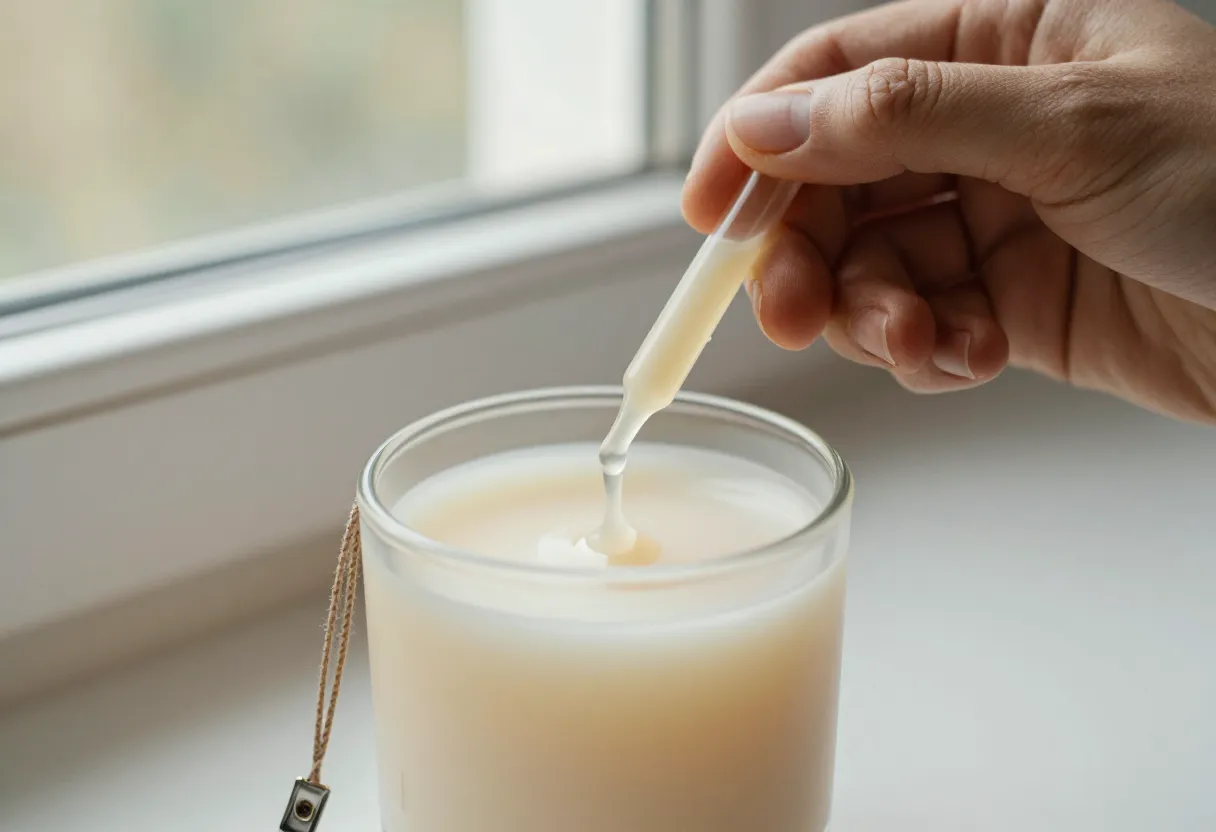
I see this quite often with makers who are just starting out: they focus entirely on the “vibe” of the candle—the pretty label, the aesthetic jar, and the cozy scent—while neglecting how the candle actually performs as a tool. If you are designing a candle for a sleep sanctuary, its primary job is to be reliable. A candle that tunnels, smokes excessively, or has an uneven melt pool ruins the ritual because it creates a distraction rather than a sense of calm.
A “sleep” candle needs a predictable performance. This means your cure time must be strictly followed and your wick selection must be precise for that specific container and wax blend. If I get this wrong on my end, the customer gets a flickering mess that they have to manage instead of enjoy. You want to ensure that once they light it, they can forget about the candle exists until it finishes its job. Don’t let the aesthetics outpace the engineering. A beautiful candle that burns poorly is just a decoration; a reliable candle with a stable melt pool is a functional part of someone’s home routine.
A quick bench checklist for sleep-prep profiles
Before you ever put a “Sleep Sanctuary” label on a jar, you need to prove it works on your own bench. This isn’t about how the scent smells when it’s cold; it’s about how it behaves over several hours of burning. I’ve had batches look perfect in the jar but fail miserably during a long-burn test because the wick was just a hair too small or the fragrance didn’t distribute evenly through the wax.
Technical Testing Steps
- Melt Pool Consistency: Ensure the wax melts to the edges of the container without tunneling. This is critical for candles meant to burn while someone relaxes.
- Soot and Smoke Check: Observe the flame for 2-3 hours. A sleep-prep candle should be clean; any heavy soot will ruin the atmosphere.
- Fragrance Throw: Test the “cold throw” (smell of the jar) and “hot throw” (scent when burning). The scent should be present but not overwhelming enough to cause headaches.
I recommend keeping a detailed burn-log for every new profile you develop. Use our wick-selector to find the right starting point, and always check your pour-and-cure guide to ensure the wax has had enough time to set properly before it hits a customer’s shelf.
To get started on your first batch of calming candles, check out our start-here-your-first-candle guide.
Inspired by a story from House Beautiful.
Get the next issue
Questions or corrections? Send a note. Or read more issues.