

Guides Safety
Candle Safety: Making, Burning and Selling Candles Responsibly
How to melt and pour wax safely, what to do if a wax fire starts, how to burn a candle safely, and what to know about warning labels and testing.
Candle making involves hot wax, flammable fragrance oils and an open flame, and every one of the previous guides in this series has leaned on this one. Most candle accidents are preventable, and most of the prevention is habit rather than equipment. This guide covers three situations: safety at the bench while you make candles, safety when a candle is burning, and what you should know before you give or sell candles to other people.
Safety at the bench
Making candles safely starts with how you set up and how you behave while the wax is hot.
Set up your space
- Work somewhere ventilated, with good light and a flat, stable surface.
- Keep the area clear. Remove clutter, paper, towels and anything flammable from around the heat source.
- Protect your surfaces. Wax spills are hard to clean and easy to slip on.
- Keep children and pets out of the room while you work.
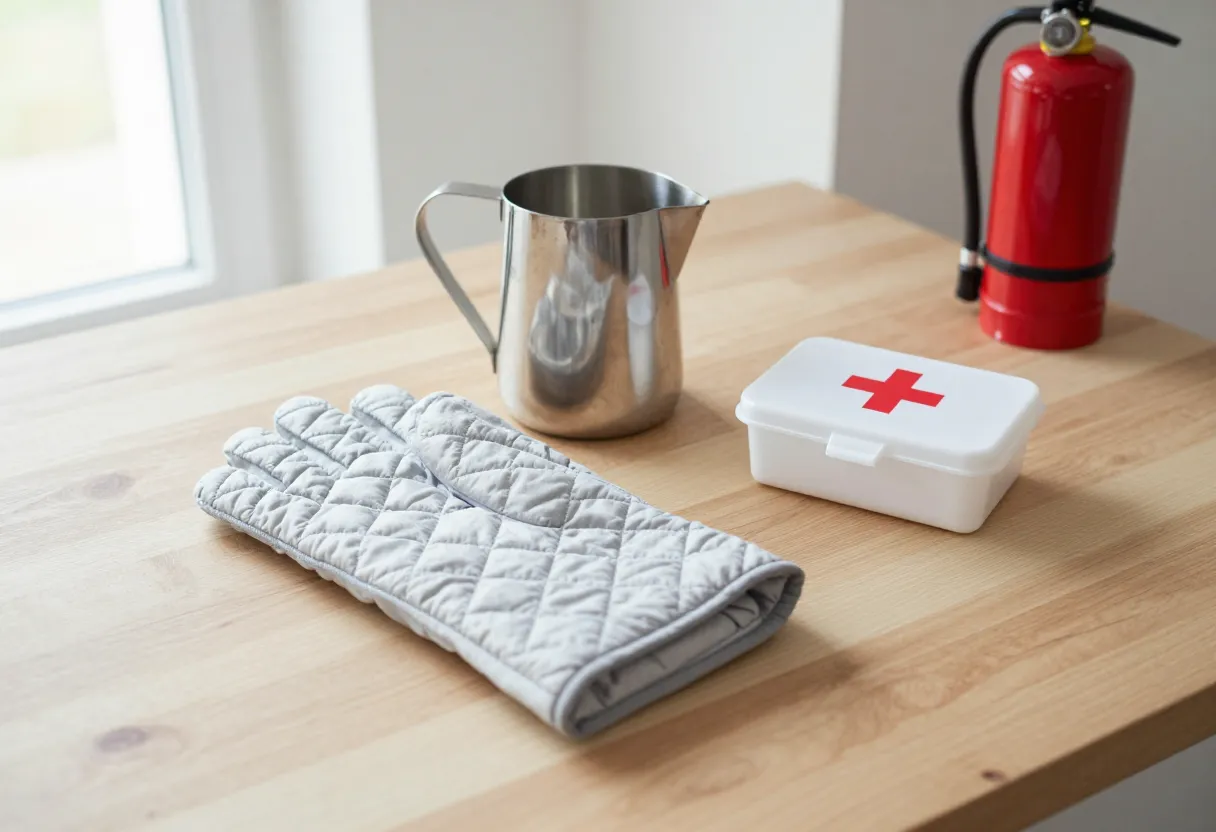
- Have the right equipment nearby: a lid that fits your melting pot or pitcher, a fire extinguisher, a first aid kit, and a phone.
Melt wax safely
- Use a double boiler or a melter made for wax. Never heat wax directly over a flame or burner, and never melt it in a microwave unless the wax maker says it’s safe.
- Watch the temperature with a thermometer, and stay within your wax supplier’s limits. Overheated wax can smoke and can ignite.
- Never leave hot wax unattended, even for a moment.
- Keep water away from hot wax. Water that drips into hot wax can spatter violently.
- Dress for it. Wear closed shoes, tie back long hair, wear heat-resistant gloves when handling hot containers, and avoid loose sleeves.
- Add fragrance off the heat, with the wax at the temperature your supplier gives. Fragrance oils have flash points, and they can ignite if the wax is too hot.
Handle fragrance and dye with care
- Read the Safety Data Sheet for every fragrance oil and dye.
- Work with good ventilation, and wear gloves if the product recommends it.
- Store oils tightly closed, in a cool, dark place away from heat and open flame.
- Keep them away from children and pets, and never let concentrated oils touch skin or eyes.
Clean up safely
- Never pour wax down a drain. It hardens in pipes. Wipe equipment while it’s still warm, or pour leftover wax into a disposable container.
- Cool before you handle. Let wax and equipment cool before you move or wash them.
- Dispose of rags carefully. Rags soaked with fragrance oil or wax should be dealt with as the oil’s safety data advises.
If something goes wrong
Knowing what to do before you need it matters. A wax fire is a flammable-liquid fire, and it behaves differently from a kitchen fire you might put out with water.
- Do not carry the pot, which can spill burning wax.
- Do not fan the flames or use a towel to beat them out.
- Keep a fire extinguisher rated for your setup nearby, such as a multipurpose dry chemical extinguisher, and make sure you know how to use it. If you aren’t sure which type suits your workspace, ask your local fire department.
- If a fire spreads or you can’t control it, leave the area and call emergency services.
Burns
- Hot wax on skin: run cool water over the area right away, for about 10 to 20 minutes. Don’t use ice.
- Don’t peel off wax that has stuck to blistered skin.
- Seek medical care for large burns, burns on the face or hands, deep or blistering burns, or if you aren’t sure how serious it is.
Burning a candle safely
Everything below also belongs on the label of any candle you give or sell.
Before you light it
- Trim the wick to about ¼ inch.
- Place the candle on a stable, flat, heat-safe surface.
- Keep it at least 12 inches from curtains, paper, decorations, and anything else that can burn.
- Keep it away from drafts, vents and fans, which make flames flicker and burn unevenly.
- Choose a spot out of reach of children and pets.
While it burns
- Never leave it unattended, and don’t leave the room, go to sleep or leave the house with it burning.
- Burn in sessions of no more than about four hours. Let it cool before relighting.
- Don’t move a burning candle, and don’t touch a hot container.
- Watch for warning signs: a tall or flickering flame, smoke, a container that’s becoming extremely hot, or a cracking sound. If you see them, extinguish the candle.
Putting it out
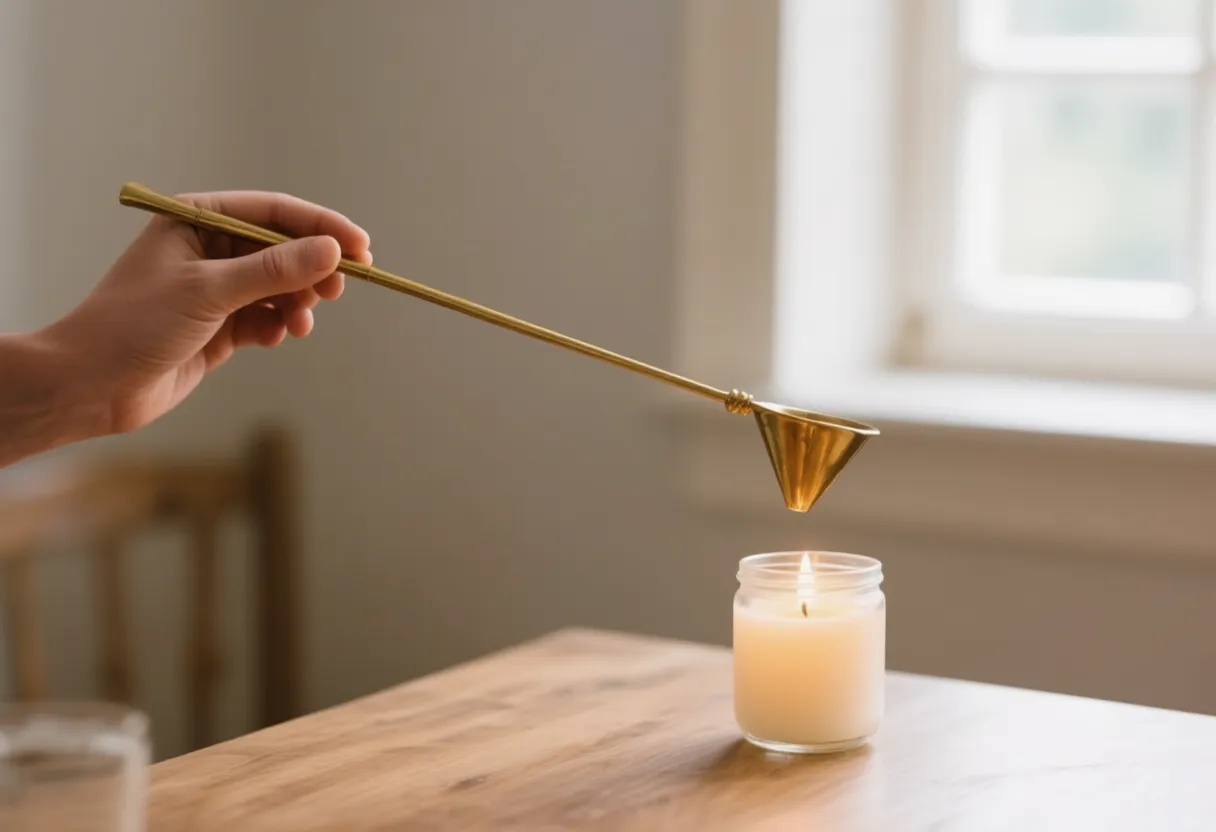
- Use a snuffer or lid to put out the flame. Blowing can splatter hot wax and leave a smoking wick.
- Never use water on a candle.
- Stay nearby until the wick stops glowing.
- Stop using the candle when about ½ inch of wax is left at the bottom, so the container doesn’t overheat.
Safe candle design
Safety is built in before the candle is ever lit.
- Use containers made for candles, inspect them for flaws, and see Candle Containers Explained.
- Size the wick properly and burn test it, as described in Candle Wicks Explained.
- Stay within your wax’s fragrance limit and your oil’s recommended usage, as covered in Candle Fragrance Explained.
- Keep dye to the minimum so it doesn’t clog the wick, as discussed in Candle Dye Explained.
- Use lead-free wicks made for candles.
Before you give or sell candles
Selling raises the standard. People will burn your candles in their homes, so the testing and the labeling matter more.
- Burn test every new recipe in the real container, to the end of the candle, and keep your notes.
- Include clear warnings on or with every candle: never leave it unattended, keep it away from flammable items, keep it from children and pets, trim the wick, burn on a heat-safe surface, and stop when about ½ inch of wax remains. A standard for candle fire-safety labeling exists (look up ASTM F2058), and you should follow the one that applies to you.
- Keep records of each batch: wax, wick, fragrance, load, dye, container and date.
- Check local rules. Requirements for labeling, ingredient information and safety testing depend on where you live and where you sell, including marketplaces like Etsy.
- Consider insurance. Many makers carry product liability insurance, and some markets and shops require it.
Common questions
Can I put out a wax fire with water?
No. Water can spread burning wax and cause violent spattering. Smother it with a lid, turn off the heat, and call emergency services if it spreads.
How long can I safely burn a candle?
A common guideline is no more than about four hours at a time. Always let it cool, trim the wick, and then relight.
Is it safe to leave a candle burning while I sleep?
No. A candle should never be left unattended, including while you sleep.
Why is my container so hot?
A wick that’s too large makes the flame and the container hotter than intended. Put the candle out, let it cool, and retest with a smaller wick.
Do I really need to trim the wick?
Yes. A long wick makes a larger flame, which creates more heat and soot and can overheat the container.
Where to go next
The last pieces are a troubleshooting guide for diagnosing problems, and a guide to selling candles. Until then, make safety a habit rather than a checklist: set up your space, watch your temperatures, test every recipe, and warn every customer.
The best candle in the world is one that’s never caused a fire.
Questions or corrections? Send a note. Ready for the next step?Browse more guides.