

Guides Selling
Shipping and Packaging Candles: Get Them There in One Piece
How to pack glass candles so they arrive unbroken: materials, layers, step-by-step packing, weather, weight and cost, carriers, test parcels and handling breakage.
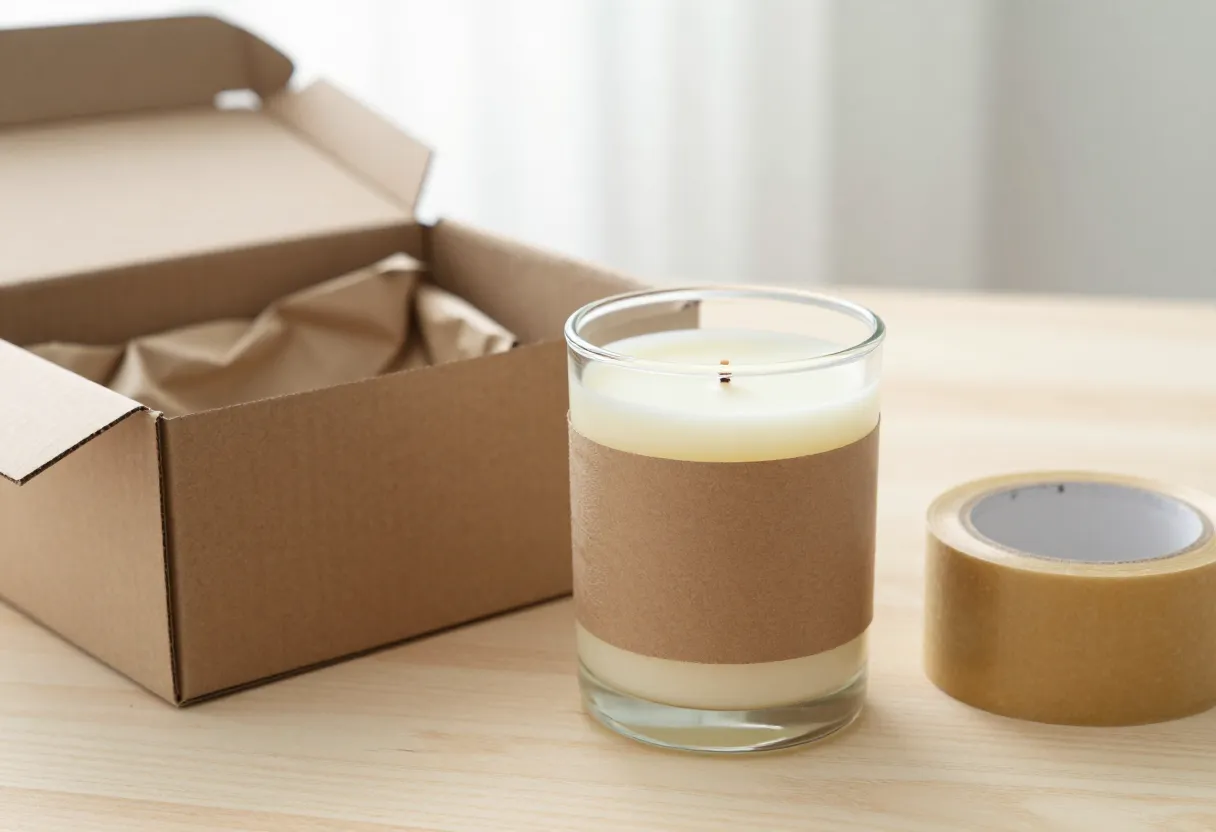
A candle that arrives broken costs you more than the candle. You lose the product, you pay for a replacement and the shipping twice, and you have an unhappy customer who may tell other people. A cracked jar of wax is also a mess and, now and then, a hazard. Shipping is not an afterthought. It is part of the product.
This guide covers how to pack and ship candles: the materials, the layers, the packing steps, what weather does to a parcel, how to work out weight and cost, how to choose a carrier, how to test your packaging, and what to do when something does break. It builds on the short shipping section in Selling Candles and goes much deeper.
Start with a candle that is ready to ship
Packaging cannot fix a candle that is not finished.
- Cure first. A candle that has not set fully, or is still warm, can shift, smear or sweat in transit. Follow your wax supplier’s cure time. The Pour and Cure Guide works out when a batch is ready.
- Trim and center the wick, and make sure the surface is clean. Loose bits of wick or wax end up everywhere.
- Put the lid on, and make sure it stays on. A lid that can pop off lets the candle shift and scuff.
- Label the candle. The warning and the front label should be on the candle or visible when the box is opened. See Candle Labels and Compliance Basics.
- Choose containers that ship well. Thick, sound glass and a simple shape protect better than thin, ornate glass. See Candle Containers Explained.
Materials worth buying
| Material | What it does | Notes |
|---|---|---|
| Corrugated shipping boxes | The outer shell | Rigid, clean and the right size. A box that is too big lets the parcel move |
| Sleeves or inner boxes | Hold each jar apart from the walls | Cardboard sleeves are a common, simple choice |
| Wrap | Protects the jar’s surface from scuffs | Kraft paper, tissue or a similar wrap |
| Padding | Absorbs knocks | Crumpled paper or other cushioning. It should fill every gap |
| Packing tape | Seals the box | Use tape made for shipping and seal every seam |
| Labels and a printer or pen | Address and tracking | Stick on a flat face, with the whole label visible |
| A scale | Weigh every packed parcel | Shipping is priced by weight and size |
| Care cards and inserts | Burn directions, thanks and a warning | Small, flat and easy to put in |
Buy a few box sizes, and buy a lot of one size once you know what you ship most. The Cost and Pricing Calculator lets you add packaging to the cost of a candle.
How a parcel is built
Think of a parcel as a set of layers around the candle, each doing one job.
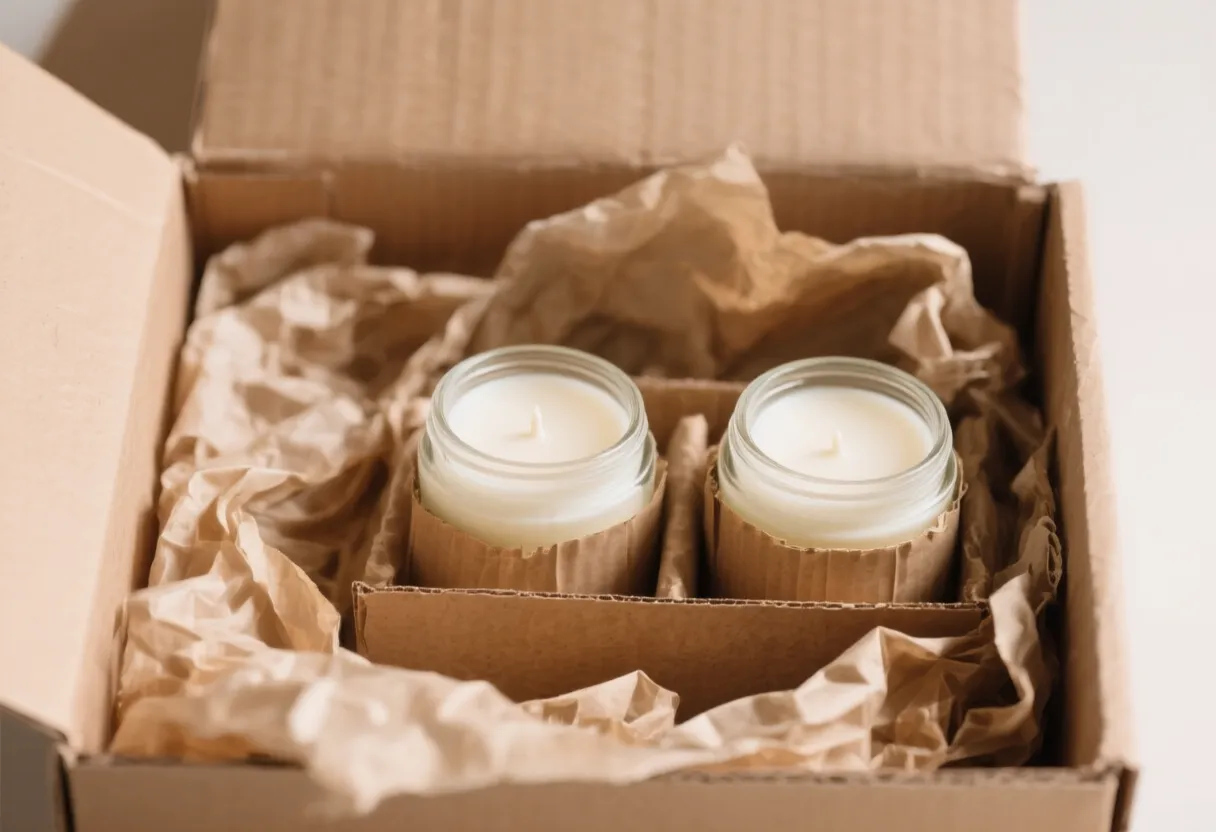
The principle is simple. The candle must not be able to move, and nothing around it should be able to crush inward. If you can shake the closed box and feel the candle shift, repack it.
Pack it, step by step
- Check the candle one last time: set, cured, lid on, and no cracks in the glass.
- Wrap it in paper or tissue so the jar does not rub against anything.
- Put it in a sleeve or inner box that fits snugly.
- Pad the bottom of the shipping box, set the candle in, and pack padding around and over it. When there is more than one candle, keep them apart with cardboard or padding, not touching.
- Add the inserts such as the care card and the warning, on top where they are seen first.
- Close and test. Close the box and give it a gentle shake. Nothing should move or rattle.
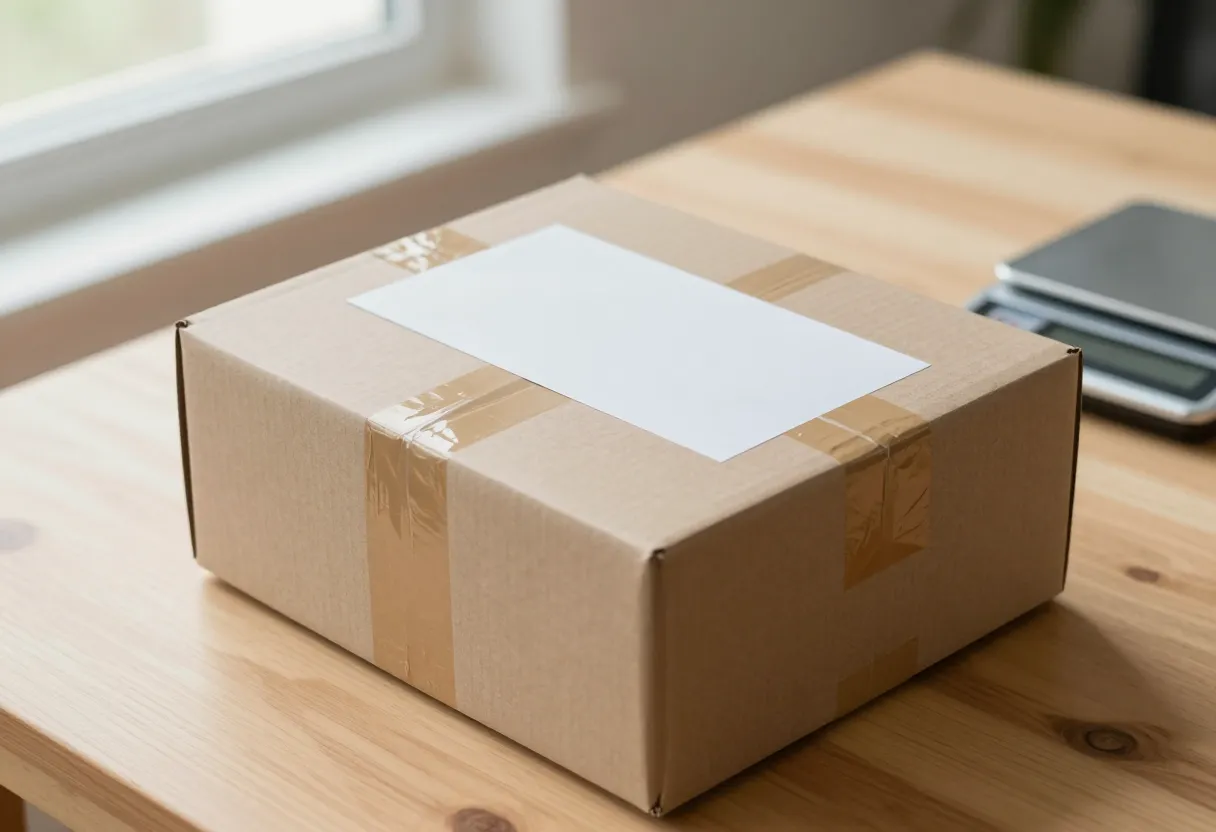
- Seal every seam with shipping tape, along the center seam and the edges.
- Weigh the parcel and put on the label on a flat face, with nothing covering it. Cover or remove any old labels or markings on a reused box.
Weather and seasons
Candles are made of wax and glass, and both react to the weather. You cannot control what a parcel goes through, but you can plan for it.
- Heat. Wax can soften and shift in a hot truck or on a hot porch, and the surface can scuff or smear. Choose faster shipping in hot weather, avoid sending a parcel that will sit over a weekend, and consider pausing shipments in extreme heat or telling customers about the delay. Ask your wax supplier what to expect from the wax you use.
- Cold. Glass can be more brittle in cold weather, so pad well. Tell customers to let a cold candle come to room temperature before they light it.
- Plan around seasons. Holiday rushes mean slower deliveries and rougher handling. See Seasonal Candle Planning.
Weight, size and cost
- Weigh the packed parcel, not just the candle. The label’s net weight is for the wax, fragrance and dye only. The shipping weight includes the jar, lid, wrap, padding, box and inserts.
- Measure the box. Carriers price by weight and by size, and some charge extra for large, light boxes.
- Price shipping honestly. Either charge the real cost, charge a flat rate you have worked out from your average parcels, or build shipping into the product price. Whichever you choose, include the cost of packaging materials. Use the Cost and Pricing Calculator to see what a candle really costs.
- Pick the right service. Compare the carriers and services available to you for speed, tracking, insurance and price. Cheaper is not better if parcels arrive late or broken.
- Ask your carrier whether anything about your product, such as its size, weight, packaging or contents, needs special handling or special rules. Do not assume. Ask, and keep their answer.
Tracking, insurance and “fragile” stickers
- Always use tracking, and send the number to the customer.
- Consider insurance or a carrier’s protection for higher-value orders, and check what it covers and what proof it needs.
- A “fragile” sticker does not guarantee careful handling. Pack as if every parcel will be dropped.
Test before you sell
The best test of your packaging is a real trip.
- Pack a candle exactly the way you will pack a customer’s order.
- Ship it to a friend or relative, ideally some distance away, and ask them to open it and send you photos of how it arrived.
- If it arrives damaged, change one thing about the packing, and test again.
- Keep your packing steps written down, with a photo of the finished layout, so you and anyone helping you do it the same way every time.
If you sell on a marketplace, also check its shipping and delivery-time rules, and set your processing time and shipping profile to match what you can really do.
Inside the box
What the customer sees when they open the parcel is part of the product.
- A warning and burn directions, on the candle and on a card. They should be easy to find. See Candle Labels and Compliance Basics.
- A care card with a few lines on trimming the wick, burning, and how long to burn the first time. Use directions you have tested. See Burn Testing and Curing.
- A thank-you note, and a way to reach you if there is a problem.
- Wrapping that opens easily, so no one has to cut near the glass.
When something breaks
Even a well-packed parcel sometimes breaks.
- Make it easy to report, with a simple policy on your listing: a photo of the damage and the packaging, sent within a set time.
- Replace or refund quickly. It costs less than a bad review, and a calm reply often turns an unhappy customer into a loyal one.
- Keep the photos and the details. They show you what failed, and they support a carrier claim if you insured the parcel.
- Fix the cause. Look at how it was packed, and change one thing at a time.
- Keep a log of breakages by box, carrier and season. A pattern tells you what to change.
Shipping outside the United States
International shipping adds customs forms, longer transit times, and rules that differ by country. Some places restrict or tax candles or fragrance products. Start with domestic orders, and read your carrier’s and the destination country’s rules before you offer international shipping.
Common questions
Do I need to ship with the lid on?
Yes. A lid keeps the surface clean and the candle from shifting. Make sure it is secure.
How much padding is enough?
Enough that the candle cannot move when you shake the closed box, and enough that no corner or side of the jar touches the box walls.
Can I reuse boxes?
Yes, if they are clean, rigid and the right size. Remove or cover old labels and markings, since a carrier’s scanner may read them.
Is it safe to ship candles in summer?
Many makers do, with care. Choose faster shipping, avoid weekends in transit, and consider a pause in extreme heat. Ask your wax supplier how your wax behaves.
Should I include a care card?
Yes. It gives the customer your tested directions and the warning, and it shows you take care.
Should I offer free shipping?
You can, if you build the cost into the price. Work out your real costs first.
Where to go next
- Selling Candles for pricing, listings and the business basics.
- Candle Labels and Compliance Basics for the label and warning.
- Cost and Pricing Calculator to include packaging and shipping in your price.
- Candle Photography for pictures that sell the candle.
- Seasonal Candle Planning to plan for the holiday rush.
Questions or corrections? Send a note. Ready for the next step?Browse more guides.