
Guides Selling
Candle Labels and Compliance Basics for Sellers
What goes on a candle label in the U.S.: the front label, the standard fire-safety warning, wick and hazard checks, batch codes, and when to ask a professional.
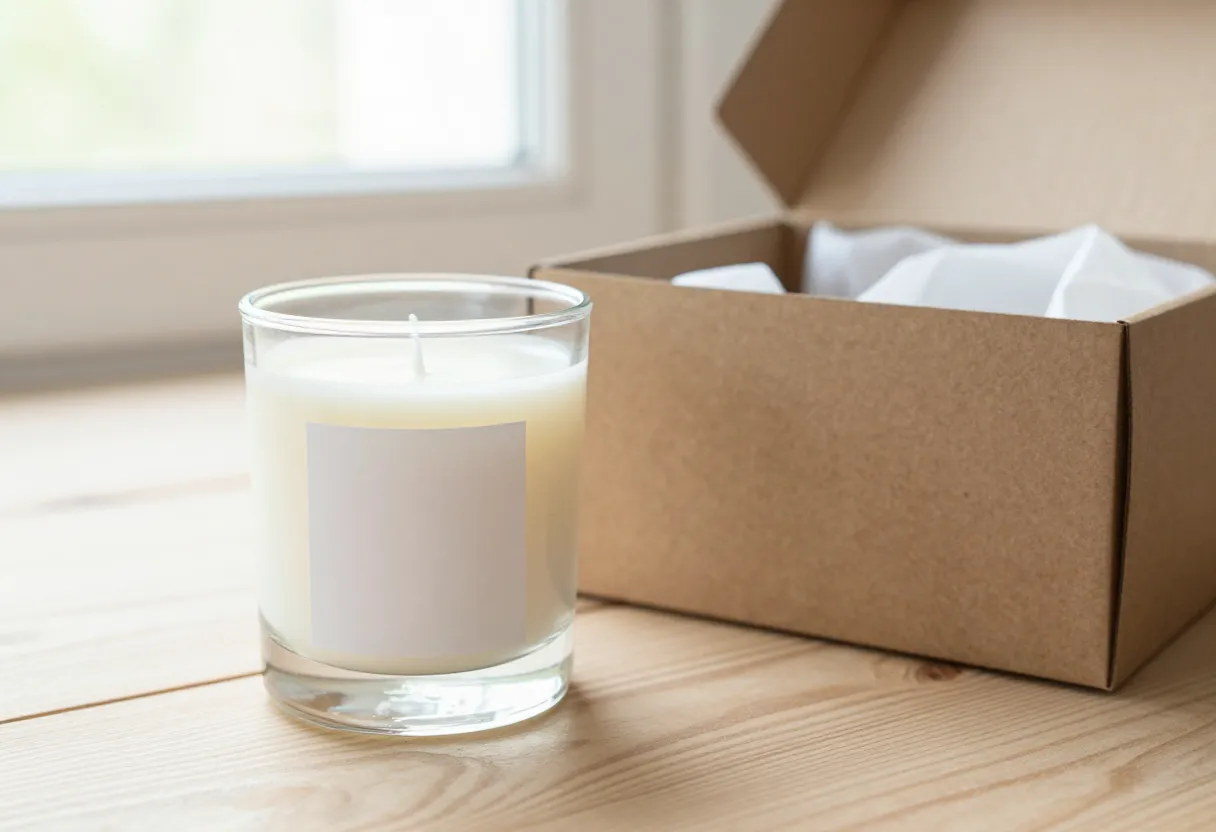
The moment you sell a candle, it stops being a hobby project and becomes a product, and a product has to say what it is. A good label does three jobs. It tells the customer what they bought and who made it. It tells them how to burn it safely. And it shows that you took reasonable care, which matters for your customers and for you.
This guide walks through the basics of labeling candles for sale in the United States: what the law asks for, what the industry expects, what to check for your own situation and how to put it all together. It goes with the Label and Warning Builder, which drafts the text, and builds on the label section of Selling Candles.
Three layers, not one rule
People ask “what does the law require on a candle label?” as if there were one list. In practice there are three layers, and it helps to keep them apart.
- Required on the label. The federal packaging rules ask that a consumer product say what it is, who made it and where, and how much is in the package.
- Standard practice. A fire-safety warning on the candle is not a federal law for most candles, but it is what the industry expects and what a careful maker does. The standards are voluntary, and they are the benchmark for reasonable care.
- Check for your situation. Some rules apply only if you use certain materials or sell in certain places.
The front label
Federal packaging rules, enforced by the Federal Trade Commission, ask for three things on the front of a consumer product: a statement of what it is, the name and place of business of whoever made or packed it, and the net quantity. The rules are in 16 CFR Part 500. Here is what that means for a candle.
- What it is. A plain statement of the product, such as “scented candle”, “pillar candle” or “wax melts”. A scent name or a brand name on its own does not say what the product is, so keep the statement of identity even if your label is full of design.
- Net weight. How much product is in the package, by weight, in both U.S. and metric units, such as “NET WT 8 OZ (226 g)”. It counts the wax, the fragrance and any dye. It does not count the wick, the container or the packaging. A pound or more is written in pounds and ounces.
- Maker and place. The name of the business that made or packed the candle, with its city and state. The place can appear on the warning label instead of the front if you prefer.
A few practical points:
- Weigh your finished candles. Do not rely on the number you meant to pour. If the real weight is a little under what you declared, the label is wrong. Round your declared weight down, never up.
- Check the size and position rules. The net weight wording must be a minimum height, which depends on the size of the front of the package, and it belongs in the lower part of the front. A small label can make this hard, so check the rule for your label size.
- A multi-piece package, a set or a package with extras follows additional rules. Check before you design the label.
The Label and Warning Builder formats the net weight in ounces and grams, rounded down, and builds the front label text for you.
The warning label
The fire-safety label on a candle is not a federal requirement for most candles, but it is the industry standard. ASTM F2058 is the standard for candle fire safety labeling, and the National Candle Association, the Consumer Product Safety Commission and others work with it. It covers what a warning should say, how it should look and where it should go.
The core messages are three:
- Burn within sight.
- Keep away from things that can catch fire.
- Keep out of reach of children (and many makers add pets).
The standard also describes how the warning is presented:
- A text warning starts with the safety alert symbol, followed immediately by the word WARNING in capital, bold letters, and then the statements. A warning can also use pictograms in place of text.
- It must be visible to the buyer at the point of sale, and it must not be covered, hidden or removed by anyone who handles it afterwards.
- It does not apply to birthday candles or to candles for places of worship, or for commercial or industrial use.

Extra burn directions
Many makers add lines such as trimming the wick to about ¼ inch before each use, burning on a level heat-resistant surface, and stopping when about ½ inch of wax remains. Add them if they match what you tested. One line deserves extra care: a maximum burn time. Print a number only if your own burn tests support it, because a wrong number is worse than none. See Burn Testing and Curing for how to test.
Wax melts
A wax melt has no wick and is not meant to be lit, so the candle warning does not fit. Use a melt warning instead, which says it is not a candle, that it is for use in a warmer made for wax melts, that the warmer must never be left unattended and that it is to be kept away from children and pets. Check your wording against the guidance from your supplier and the maker of the warmer. See Pillars, Votives and Wax Melts.
Batch codes and traceability
A batch number or date on every candle is not on a federal list, but it is one of the most useful things you can print. If a customer reports a problem, a batch code tells you which wax, wick, fragrance and pour the candle came from, and which other candles might be affected. It also lets you match a candle to your batch records and to the test candle you kept from that batch.
Check for your situation
Wicks with metal cores
A wick with a metal core must keep the lead in the core below a set limit. The Consumer Product Safety Commission’s rule covers wicks made or imported after October 2003, and puts the limit at 0.06 percent lead by weight (16 CFR 1500.17). Manufacturers and importers of metal-cored wicks must issue a certificate of compliance. If you buy metal-cored wicks, ask your supplier to confirm that they comply, and keep the paperwork. Wicks without a metal core are not covered by the certificate requirement.
Hazardous substances
The Federal Hazardous Substances Act requires cautionary labeling when a product contains a substance that counts as hazardous. Read the safety data sheet for every fragrance oil and dye and ask your supplier if any of them raises a hazard. The CPSC’s guidance for candle businesses is the place to start.
California
California’s Proposition 65 requires a warning when a product causes a significant exposure to chemicals on its list. Whether a candle needs one depends on its ingredients and on how and where you sell it. Read the official guidance if you sell to California customers, and ask your suppliers.
Other places
Other countries, including the European Union, the United Kingdom and Canada, have their own rules, and some are stricter, for example on listing fragrance allergens. Some states, and some marketplaces, add requirements of their own. If you sell internationally, treat this guide as a starting point only, and read the rules for each place.
Ingredients
An ingredient list is not one of the three basic federal front-label items for a candle. Some customers, marketplaces and countries still expect one, and listing the wax type and whether it contains dye or fragrance can build trust. If you list ingredients, make sure what you list is accurate.
Build your label
- Start with the front label. Statement of identity, net weight in ounces and grams, maker and place.
- Add the warning. Safety symbol, WARNING, the three core messages, and any burn directions you have tested.
- Choose where each goes. Front label on the container or the box. Warning on the base or the back, and repeated in the packaging.
- Add a batch code.
- Print a sample and look at it. Is every line readable at the size you will print? Is the warning visible once the candle is packed?
- Keep a copy of every version of the label, with the dates you used it.
The Label and Warning Builder does steps 1 to 3 and shows a checklist of what to verify.
Packaging that keeps the label working
A warning that falls off or is hidden under tissue paper is not doing its job.
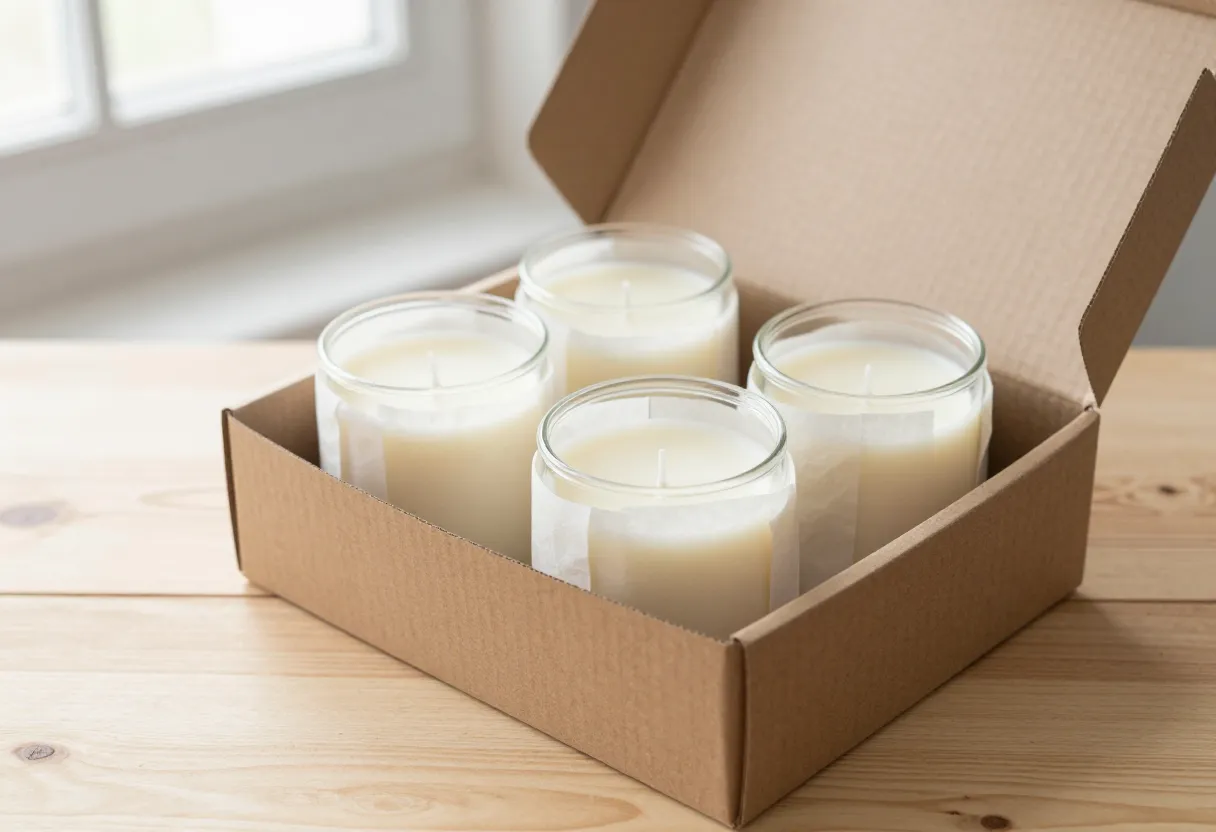
- Use adhesive labels that stick well to glass and will not peel off in the heat of a shipment, or print directly on the packaging.
- Put the warning where it stays visible when the candle is unwrapped.
- Pack the candle so it cannot rattle. A cracked jar in a box is a customer service problem and a safety one. See Selling Candles for shipping.
Records and review
- Keep the paperwork: safety data sheets for every oil and dye, supplier statements and certificates, and your batch records.
- Re-read your label when you change a product, a supplier or a place you sell.
- Ask for a professional review of your label and your insurance once, before you scale up. A one-off check costs far less than a recall or a claim.
Common questions
Is a warning label required by law?
For most candles, the fire-safety warning is not a federal requirement. It is the industry standard, and it is what a reasonable maker does. The three front-label items, though, are required.
Do I have to list ingredients?
It is not one of the three basic federal front-label items for a candle. Check the rules where you sell, and the marketplace you sell on.
Where should the warning go?
Where the buyer can see it at the time of sale, and where it will stay. Many makers put it on the base of the container and repeat it in the packaging.
Can I copy another maker’s label?
No. Copy the structure, not the content. Their weight, their batch and their tested directions are not yours.
Do wax melts need a different label?
Yes. They are not candles and are not lit, so they need a melt warning. See above.
Do the rules change?
Yes. Check the sources again when you change something, and at least once a year.
Where to go next
- Label and Warning Builder to draft your label text.
- Burn Testing and Curing before you print burn directions.
- Selling Candles for pricing, listings and shipping.
- Candle Safety for the safety habits behind the label.
- Candle Photography for the pictures that go with the label.
Questions or corrections? Send a note. Ready for the next step?Browse more guides.