

Guides Safety
Reading a Safety Data Sheet: Fragrance Oils, Dyes and Wax
How to get and read a safety data sheet (SDS) for your fragrance oils, dyes and wax: the 16 sections, the six to read every time, flash point, and what an SDS cannot tell you.

Almost every guide on this site says the same thing at some point: check the safety data sheet. It is good advice, and it is the advice beginners are least likely to follow, because a safety data sheet looks like a wall of small print written for chemists. It is not. Once you know where to look, an SDS answers the questions a candle maker actually has: how hot is too hot, what do I do if I get it on my skin, how do I store this, and what should I wear.
This guide shows you how to get a safety data sheet for each oil, dye and wax you buy, how its pages are laid out, which sections to read every time, and what an SDS does not tell you. It goes with Candle Safety and Candle Fragrance Explained.
What a safety data sheet is
A safety data sheet, often called an SDS, is a document a manufacturer or supplier writes for a chemical product. It tells you what is in the product, what hazards it carries, and how to handle, store, use and dispose of it safely, and what to do in an emergency. For a candle maker the products that matter are fragrance oils, dyes and wax, and anything else you melt, mix or clean with.
Two points to keep in mind:
- An SDS is about the product as it is sold, such as a bottle of concentrated fragrance oil. It is not about the finished candle. It does not tell you how a candle will burn.
- It is not a recipe. It will not tell you how much fragrance a wax can hold or what wick to use. That comes from your wax supplier, your wick supplier and your own burn tests.
Get the sheet, and keep it
- Ask the supplier. Reputable candle suppliers publish an SDS for every fragrance oil and dye, often as a download on the product page, and will send one on request. If a supplier cannot give you one, think twice about buying from them.
- Get one for every product, not just the scary-sounding ones. That includes your wax, since hot wax is a hazard of its own.
- Keep them together, printed in a binder or saved in a labeled folder, and easy to reach at the bench. If someone gets a splash in the eye, you do not want to be hunting for it.
- Check the date. Suppliers update SDSs when a formula changes. When you reorder, check for a new version and replace the old one.
- Write the product name and your supplier’s lot, if it has one, on the sheet or in your batch record. See Candle Workshop Setup and Small-Batch Production.
How a safety data sheet is laid out
In the United States, safety data sheets follow a standard 16-section format set out in the Occupational Safety and Health Administration’s Hazard Communication Standard (see OSHA’s guide to the format and its Appendix D). It aligns with the international system known as GHS. The headings and their order are the same from one supplier to the next, so once you have read one SDS you know where to look on any other.
OSHA requires sections 1 to 11 and section 16 on a sheet. Sections 12 to 15 cover ecology, disposal, transport and regulations, which are handled by other agencies, so they are optional under the standard and some suppliers give you little there. That matters for you because section 13, disposal, may be thin.
The six sections to read every time
Section 2: hazard identification
This is the summary. It gives the hazard classification, a signal word such as “Danger” or “Warning”, short hazard statements, pictograms, and precautionary statements about what to do and not do. In a fragrance oil, typical hazard statements are about skin or eye irritation, an allergic skin reaction, or harm to aquatic life. Read every line. This is also where you see whether the product is flammable.
Section 4: first-aid measures
What to do if the product gets on your skin or in your eyes, is breathed in, or is swallowed. It is written for someone who is not a medical professional. Read it before you need it, and put the sheet where you can grab it. If anything serious happens, call your local emergency number or poison control and keep the sheet handy so you can read out the name of the product.
Section 5: fire-fighting measures
What kind of extinguisher or other material is suitable, and what to avoid. It also lists any hazards that come from the product itself in a fire. This matters at the bench. Know what your extinguisher is rated for, and how it matches what you melt and mix. See Candle Safety.
Section 7: handling and storage
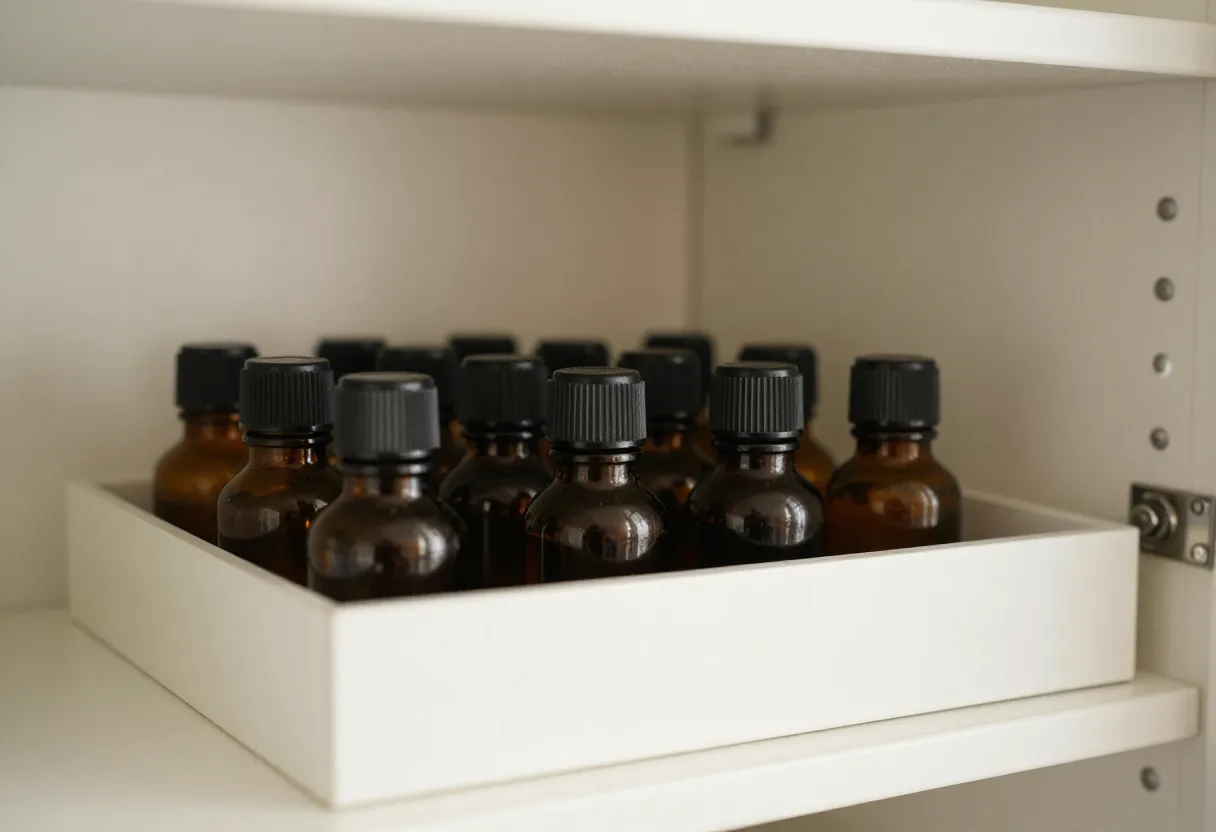
How to handle the product and how to store it: containers, temperature range, what to keep it away from, and how long it keeps. Fragrance oils usually need to be kept closed and in a cool, dark place, away from heat and flame. Follow what the sheet says for your product.
Section 8: exposure controls and personal protection
What ventilation the product needs, and what protective equipment to wear: gloves, eye protection, and sometimes a mask or other gear. It also lists exposure limits, which are mostly written for workplaces. Use the equipment the sheet recommends, and ventilate your space.

Section 9: physical and chemical properties
This is where you find the flash point and other physical data such as appearance, odor and boiling point.
Flash point, in plain words
The flash point is the lowest temperature at which a liquid gives off enough vapor to ignite when there is a spark or flame nearby. It matters to candle makers because you add fragrance oil to hot wax. If the wax is hotter than the oil’s flash point when you pour it in, the oil can ignite.
- Find the number for each oil in section 9. It differs from oil to oil.
- Add fragrance at the temperature your wax supplier gives, and make sure it is comfortably below the flash point of the oil you are using. If the two ever seem to disagree, stop and ask your supplier.
- Add fragrance off the heat, and stir gently. This is the same advice as in Candle Safety and Candle Fragrance Explained.
Never treat a flash point as a safe operating temperature or a reason to go hotter. It is a limit to stay well away from.
The sections to check when you need them
- Section 1, identification. The product name, the supplier’s contact details and an emergency phone number. Useful for matching a bottle to a sheet.
- Section 3, composition. The ingredients that matter for hazard purposes. Fragrance suppliers often keep exact formulas private, so a fragrance SDS may list only certain components, and may say that some information is withheld.
- Section 6, accidental release. How to clean up a spill safely. Read it once, so you know before it happens.
- Section 13, disposal. How to dispose of the product and its containers. Do not pour oils or wax down a drain. If the sheet gives little guidance, ask your supplier and check your local rules.
The remaining sections, 10, 11, 12, 14, 15 and 16, cover stability, health effects, environmental effects, transport, regulations and revision details. They are worth a skim, especially stability and reactivity, which lists what to keep the product away from.
Which section answers which question
Reading the hazard language
Hazard statements are short and blunt, and they can sound alarming. Some points to keep your head:
- A hazard statement tells you the product can cause a problem under certain conditions, such as skin contact with the concentrate. It is not saying a finished candle is dangerous.
- “Danger” is a stronger signal word than “Warning,” and it is used for more severe hazards. Take either seriously.
- Skin sensitizers can cause an allergic reaction in some people after repeated contact. Wear gloves and wash up, even if the oil has never bothered you before.
- Aquatic toxicity statements are a reason not to pour the product down a drain or onto the ground.
- If a sheet seems to contradict another source, such as your wax supplier, do not pick the one you like. Ask both suppliers.
What an SDS does not tell you
- How much to use. The fragrance load comes from your wax supplier’s maximum, and an oil’s own guidance. See the Fragrance Load Calculator and Pour and Cure Guide.
- How it burns. Only a burn test tells you that. See Burn Testing and Curing.
- Whether it is legal to sell in your product. Labeling and regulatory rules are separate. See Candle Labels and Compliance Basics.
- Anything about a blend. If you mix oils, you are making a new mixture. Work to the most restrictive sheet. See Scent Blending 101.
Some suppliers also provide extra usage guidance for fragrance oils in candles, such as industry usage documents. If you get one, read what it says about candle use.
Make it a habit
- Before you buy, ask for the SDS.
- When it arrives, read sections 2, 4, 5, 7, 8 and 9, and note the flash point.
- File it, and put the product name and date on it.
- Set up the bench with the gloves, eye protection and ventilation it asks for.
- Store the product the way section 7 says.
- When you reorder, check for an updated sheet.
- Put the key points in your batch record, such as the flash point and the lot.
Common questions
Do I really need an SDS for every oil?
Yes. Each oil has its own hazards and its own flash point. Ask for one with every new oil, dye and wax.
Where do I find one?
On the supplier’s product page, or by asking them. If you cannot get one, treat that as a warning sign about the supplier.
Do I need to print it?
You need to be able to reach it quickly, even if the power or the internet is out. A printed copy in a binder is the safest.
Is a fragrance oil dangerous because its SDS has warnings?
Concentrated oils are chemicals that need care, so most carry warnings. Follow the handling, protective equipment and storage advice, and the risk is manageable.
What is the difference between an SDS and an MSDS?
“MSDS” is the older name for the same kind of document. The current standard format is the 16-section SDS. If a supplier gives you an old-style sheet, ask for an updated one.
What if the SDS says very little?
Ask the supplier for more. If a supplier cannot say what is in the product or how to use it safely, consider a different one.
Where to go next
- Candle Safety for the habits that go with the sheet.
- Candle Fragrance Explained for load, flash point and curing.
- Fragrance Load Calculator to stay within your wax’s maximum.
- Candle Labels and Compliance Basics for how SDSs feed into hazard checks.
- Starting a Candle Business for the records that protect you.
Questions or corrections? Send a note. Ready for the next step?Browse more guides.